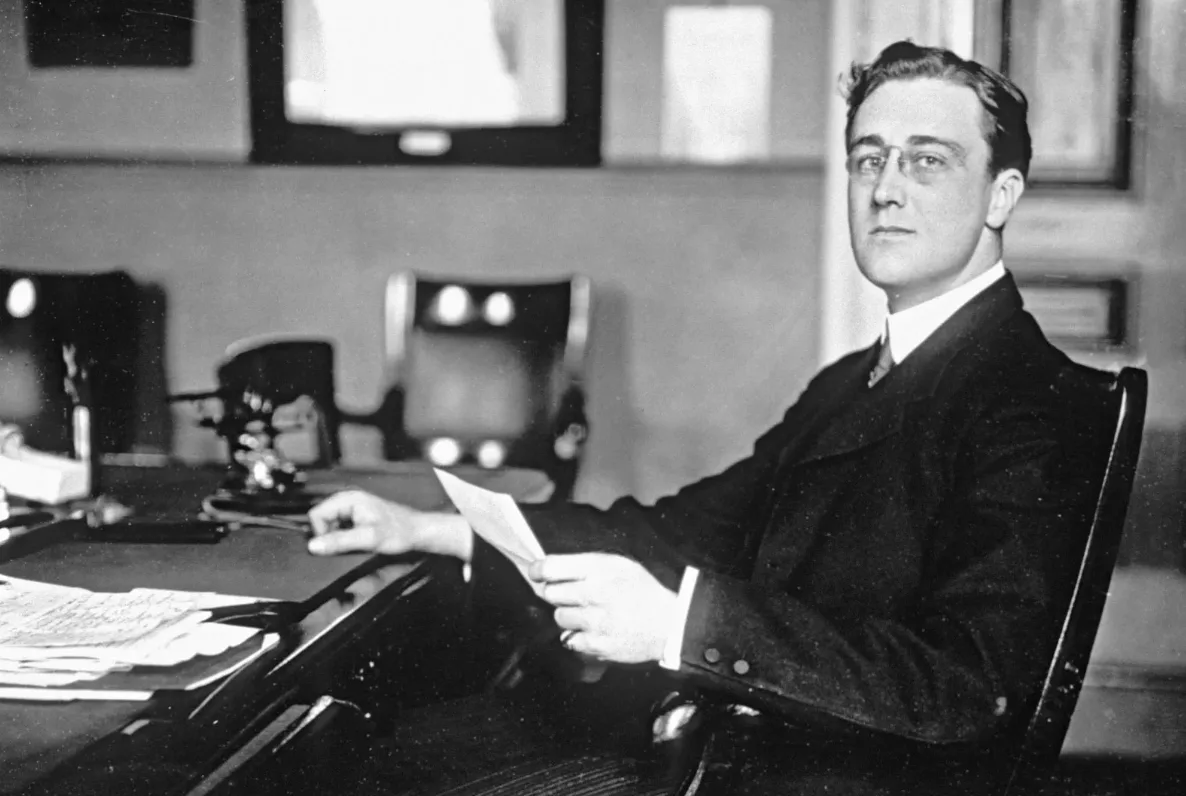
Franklin Delano Roosevelt (FDR) was a distant relative of Theodore Roosevelt, the 26th U.S. President, and also forged a remarkably successful political career. He is the only chief executive in the nation's history to be elected more than twice. Beloved by the American people and a major force in international politics, Roosevelt famously introduced the Lend-Lease program during World War II. He had also served as the Governor of New York State. And he achieved all this despite a severe illness. Learn more in this article from new-york-yes.
Early Years: A Foundation for the Future
Franklin Delano Roosevelt was born on January 30, 1882, in Hyde Park, New York, to James and Sara Delano Roosevelt. He was initially homeschooled before enrolling in the prestigious Groton School, a preparatory boarding school known for its rigorous environment and comprehensive education.
After Groton, Franklin went on to Harvard University. The ambitious young man signed up for as many courses as his schedule would allow, with a particular focus on the humanities. He also developed a keen interest in journalism, contributing articles to the student newspaper, The Crimson, and later rising to become its managing editor.
After earning his bachelor's degree in 1903, Roosevelt began graduate studies. However, he soon left Harvard and entered Columbia Law School in New York City. He successfully passed the bar examination in 1907 and immediately launched his own law practice.
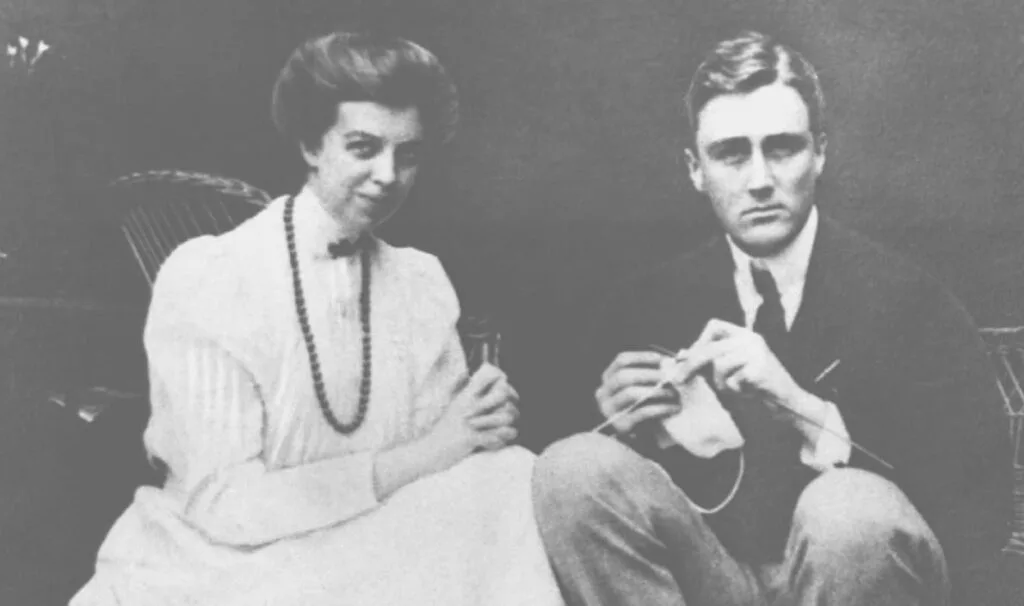
Personal Life and the Struggle with Illness
In 1905, Franklin Roosevelt married Anna Eleanor Roosevelt. She was a distant cousin and the niece of President Theodore Roosevelt. The couple had six children, though one died in infancy.
It is also known that the future president had a romantic relationship with his wife's secretary, Lucy Mercer, which began in 1914. Several years later, when Eleanor discovered the affair, she gave her husband an ultimatum: end the relationship or face divorce. Roosevelt halted the secret romance, but he would later rekindle it many years down the road.
Nevertheless, Eleanor always remained by his side, serving as an unwavering source of support throughout his political journey. This support became critical in 1921 when Roosevelt was struck by polio. The disease resulted in the paralysis of his legs, leaving him unable to walk without assistance. He put tremendous effort into rehabilitation and eventually regained the ability to deliver speeches while standing. Initially, however, he withdrew from public life for several years until his wife inspired him to continue his political career.
It's worth noting that Roosevelt later established a foundation to aid polio survivors and helped fund the development of an effective vaccine.
The Political Career of Franklin Roosevelt
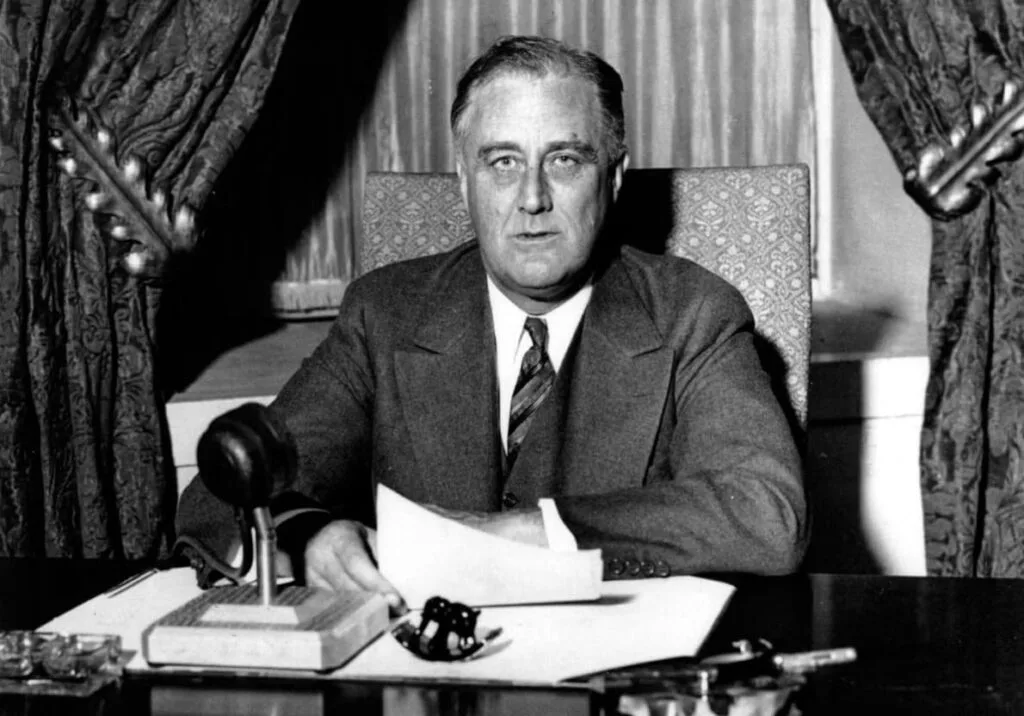
In 1910, Franklin Roosevelt was elected to the New York State Senate. Although he came from a Republican background, he represented the Democratic Party. He was re-elected to the Senate two years later.
During this period, Roosevelt supported the candidacy of Woodrow Wilson in the presidential election. As a result, he was appointed Assistant Secretary of the Navy and held that post until 1920. His success in this role led to his nomination for Vice President, but Republican Warren G. Harding won the presidency. Shortly thereafter, Roosevelt contracted polio and disappeared from the political scene for several years.
His return to politics began in 1928 with his election as Governor of New York. He served two terms, significantly broadening and deepening his experience. By 1932, the seasoned politician decided to run for President of the United States.
The nation was in the throes of the Great Depression. The U.S. economy was in crisis, voters were unhappy with the prohibition of alcoholic beverages, and incumbent President Herbert Hoover's reputation was damaged. Franklin Roosevelt seized the opportunity, offering the American people a package of reforms he called the "New Deal." His fresh approach and charisma proved to be the winning formula, securing his election as president.
The Presidency
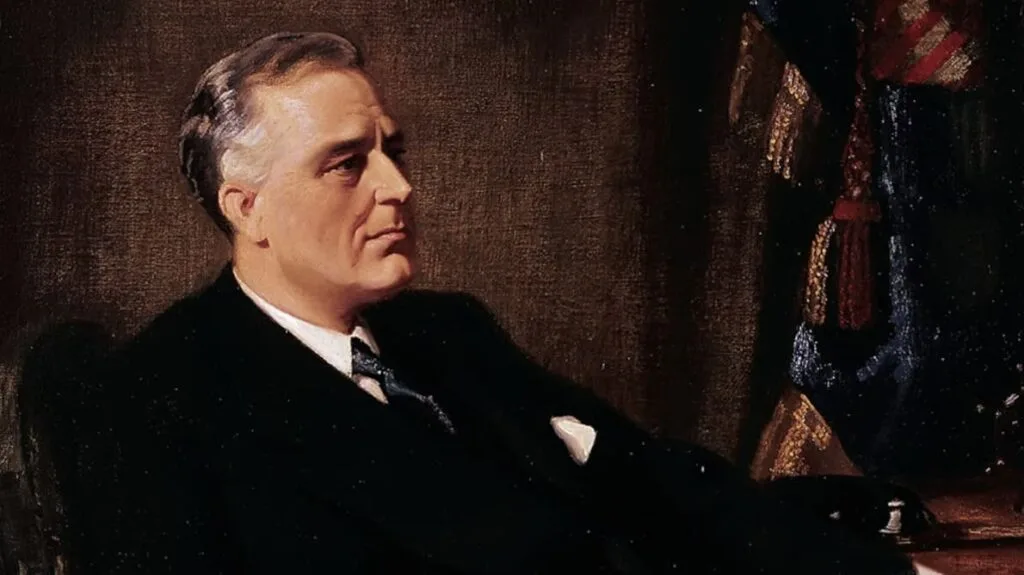
Franklin Roosevelt's inauguration took place on March 4, 1933. The economic situation remained dire. Factories were closing, farms were being foreclosed, banks were failing, and unemployment was soaring. Roosevelt immediately launched the "New Deal."
He began by ordering a temporary closure of all banks, then worked with Congress to create a series of specialized agencies:
- The Agricultural Adjustment Administration (AAA) to support commodity prices.
- The Civilian Conservation Corps (CCC) to employ young men.
- Agencies to assist businesses and workers, insure bank deposits (FDIC), and regulate the stock market (SEC).
- Relief agencies to help the unemployed.
In 1935, the Works Progress Administration (WPA) was created to provide jobs for laborers and artists alike. The Social Security Act was also passed, providing payments to the unemployed, the elderly, and those who had lost a breadwinner. These actions helped restore confidence in the economy, get the banks running again, and save millions of citizens.
Despite the challenging circumstances, Americans largely supported Roosevelt and his policies. In 1936, he easily defeated Alfred M. Landon, and he repeated that success two more times. Roosevelt became the only American president to serve four consecutive terms.
Foreign Policy and the War
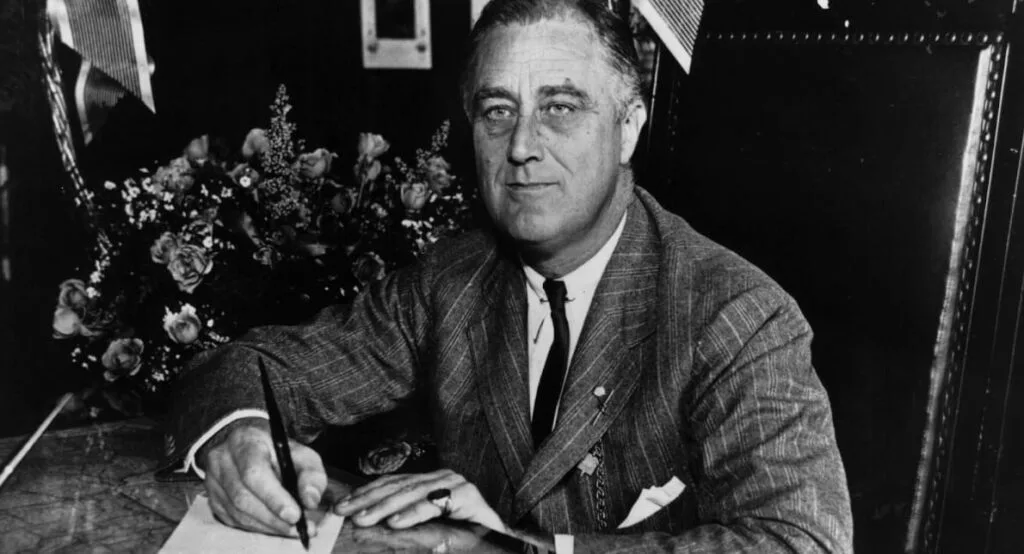
When Hitler invaded Poland in 1939, Roosevelt declared that the U.S. would not stand idly by in the face of Nazi aggression, even though the country was officially neutral. He advocated for providing aid to Great Britain and France and enacted necessary amendments to the Neutrality Acts. Furthermore, the president pushed for a buildup of American armed forces, as if anticipating the future course of events.
Initially, not all politicians and citizens supported his decisions. However, when France fell in 1940, American sentiment shifted dramatically. Congress passed a military draft bill, and Roosevelt signed the Lend-Lease Act. The U.S. became the "Arsenal of Democracy," ramping up aid to nations fighting Nazism.
The nation's neutral status was definitively revoked by the Japanese attack on Pearl Harbor in December 1941. Days later, Germany and Italy declared war on the U.S. Roosevelt took on the role of Commander-in-Chief of the Armed Forces and made numerous decisions regarding wartime strategy. His goal was the creation of a "Grand Alliance" and the establishment of a "United Nations Declaration" following the anticipated victory.
The Americans provided maximum support to the Western European front. General George Marshall planned operations for holding the line in the Pacific and organizing forces for the invasion of Europe. American landings took place in North Africa, Sicily, Italy, and ultimately, Normandy. Through these efforts, Nazism was eventually defeated.
The constant stress and pressure of the war, however, took a severe toll on Roosevelt's health. In early 1944, doctors diagnosed him with heart and circulatory disease and prescribed a strict regimen. In April 1945, the politician suffered a massive stroke and died a few hours later at the age of 63. President Roosevelt was buried at his estate in Hyde Park, New York. He was succeeded by Harry S. Truman, and Americans long remembered their beloved political leader.
Next articleTom Suozzi: The Democratic Politician Who Seeks Compromise in Everything