
When the world was consumed by the fires of World War II, a different struggle erupted in New York: one against tyranny and suppression. Although no military actions took place on the city’s territory between 1939 and 1945, there was another conflict going on: the conflict of words, views and ideas. We are talking about propaganda, which was one of the most effective weapons for influencing public opinion and shaping ideas in the city during World War II. Do you know how propaganda was used in New York City during WWII, including its forms, influence and legacy? Find out more at new-york-yes.
Formation of propaganda at the governmental level
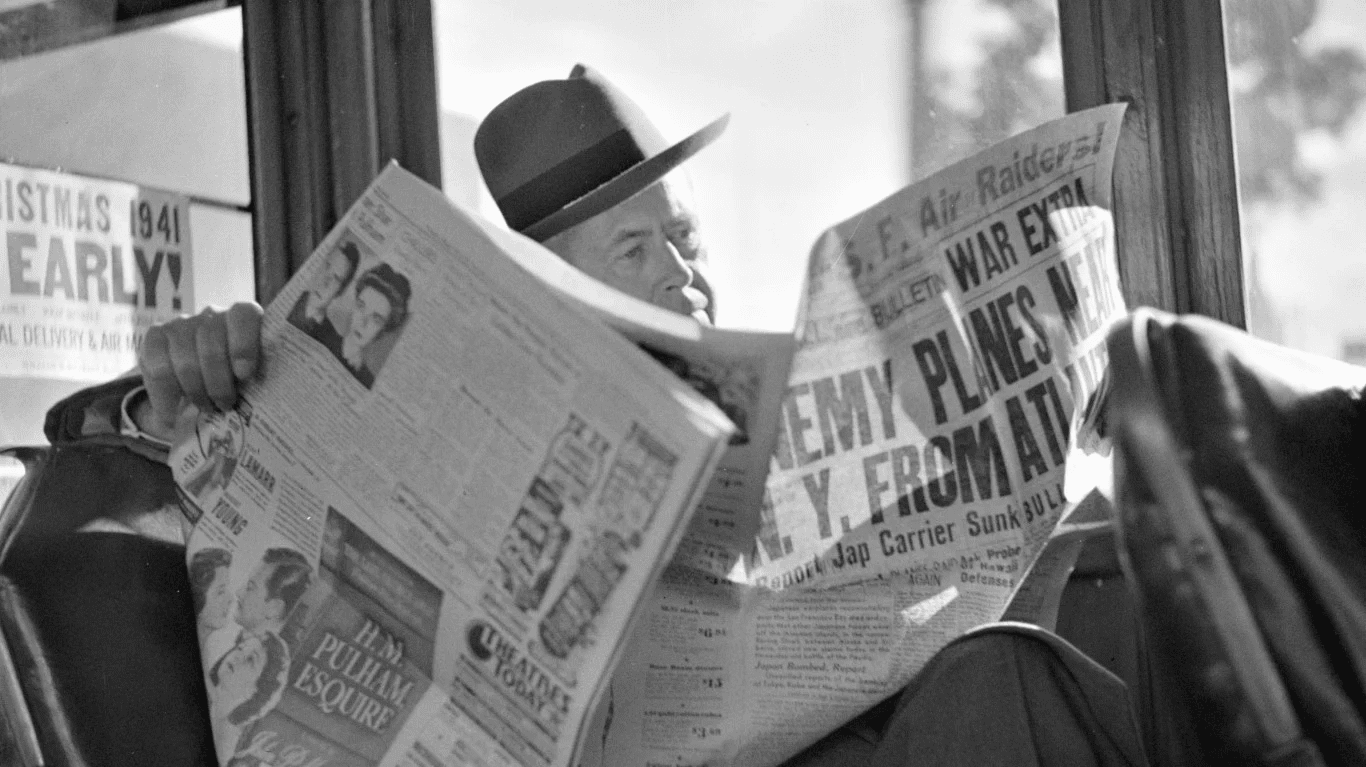
Since the start of World War II, the US government had been hesitant to participate in and launch massive propaganda campaigns. This measure was pushed by the media, advertisers and other figures from other industries. They intended to focus their efforts in one direction. Accordingly, since it was wartime, the subject of their activities was propaganda.
It should be mentioned that the government did not want its actions to be labeled as propaganda and insisted on a means of providing information. Thus, since the start of World War II in the United States, all means of providing information had gradually but steadily evolved into genuine propaganda.
It is also worth noting that wartime propaganda from 1939 to 1945 was not as large-scale as propaganda during the First World War.
Prior to that, in 1942, the Military Information Division was founded at the federal level at the request of then-President Franklin D. Roosevelt. It worked with other national and regional wartime agencies and divisions to disseminate military information and propaganda.
Forms of propaganda in New York
Propaganda did not bypass New York. Throughout the war, many popularization agencies operated in the city. Representatives from these New York agencies and departments reached out to the city’s population using a variety of means. These included cinema, theater, radio, topography and others. The Office of War Information and the War Advertising Council worked tirelessly to create and disseminate propaganda materials aimed at garnering support for the military campaign.
Posters as a powerful tool for spreading propaganda
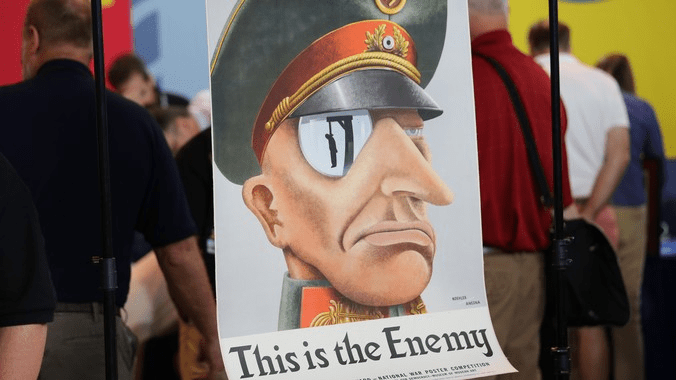
However, one of the most powerful forms of propaganda in New York City during World War II was propaganda posters. They were designed to be extremely bright, with compelling slogans that elicit emotions, patriotism and, of course, support for the armed forces.
Apparently, throughout the period of 1939-1945, propaganda in the city was mostly utilized to increase public support for the war. Propagandists worked tirelessly, not just creating posters, but also inciting hatred for the enemy. Patriotism became a central theme of advertising in New York during World War II, with propaganda frequently focusing on selling war bonds, enhancing factory productivity, dispelling numerous rumors and sustaining the city’s population morale.
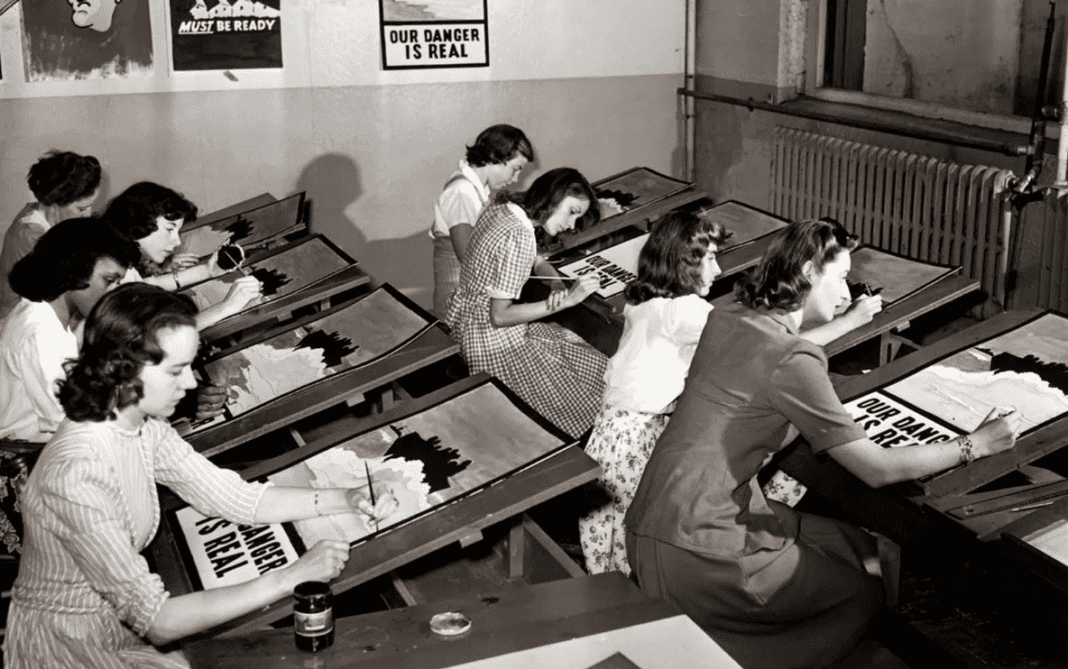
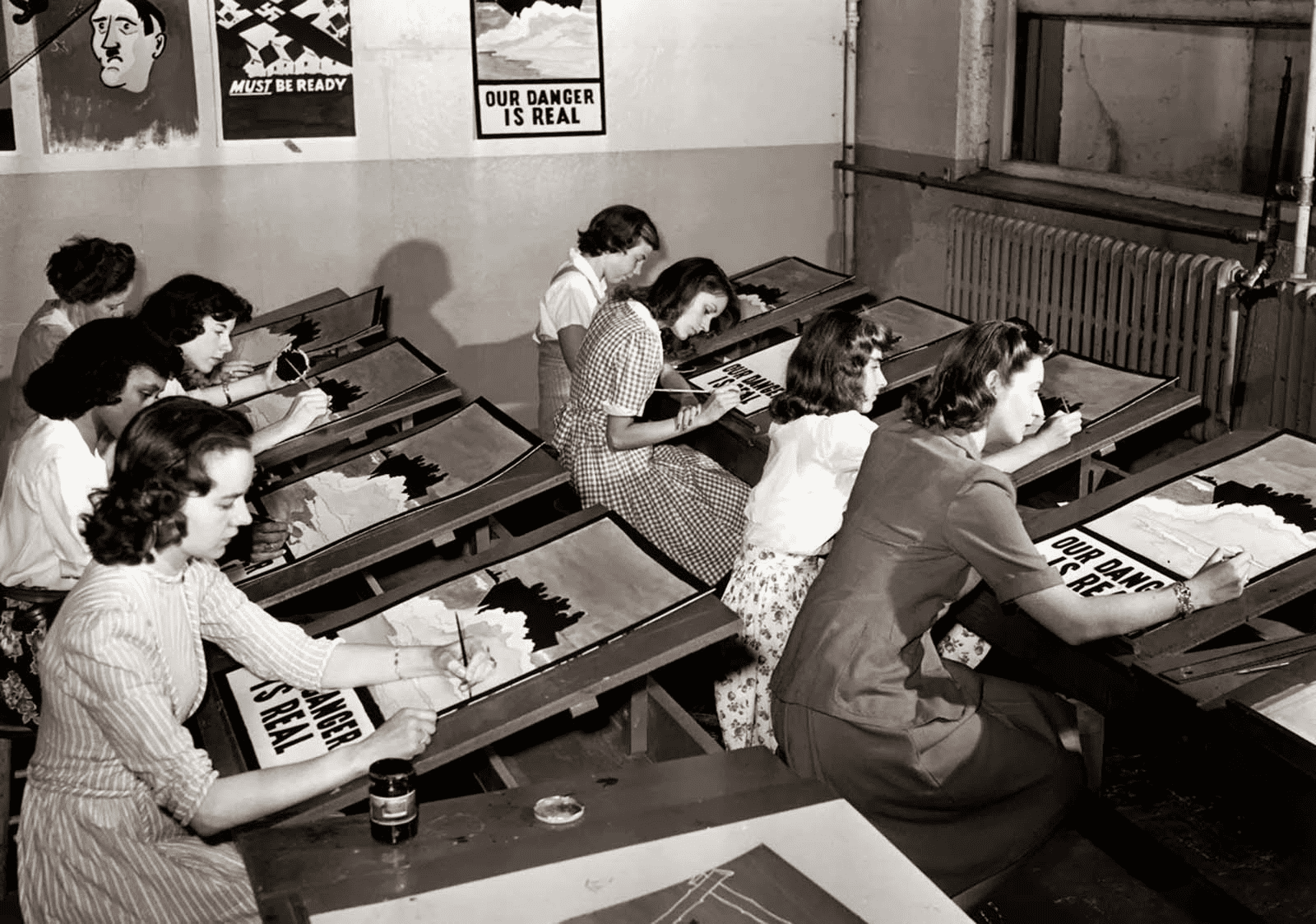
During the Second World War, such propaganda posters could be found in New York subway stations, on street corners and even in storefront windows. One of the places where such posters were created was Port Washington. For the creation of propaganda posters, entire classes of women gathered and painted them in great detail and color.
Some of the primary themes of such advertising during World War II in New York were:
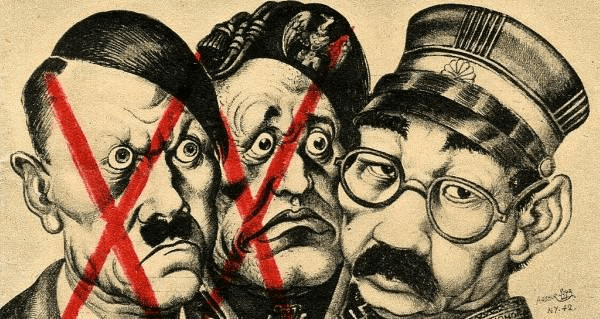
- Anti-German, in which Hitler was mocked in numerous cartoons while the Germans were shown as the evil itself. Hitler’s dictatorship was frequently subjected to brutal satire.
- The anti-Italian that ridiculed Mussolini. He, like Hitler, was portrayed as a dictator in a variety of cartoons.
- Anti-Japanese propaganda depicted the Japanese as the worst and most uncivilized enemy. On the sidewalks of New York, posters of Japanese people were most common, depicting them as “blind and ruthless fanatics” seeking foreign conquest.
Perception of propaganda by New Yorkers
With the outbreak of World War II, most New Yorkers saw propaganda as a tool of totalitarian dictatorship. Most likely, the city’s public attitude was influenced by the effects of World War I propaganda. Specifically, measures taken during World War I were considered a violation of fundamental rights, as well as disinformation. That is why, from 1939 to 1945, New Yorkers were opposed to any information provided by the government, agencies or military operations departments. Many New Yorkers believed that this kind of information dissemination distorted or even completely concealed the truth, exaggerated the atrocities of the enemy and demonized entire nations. In particular, this applied to Americans of Japanese heritage who lived in New York at that time. They were subjected to racist propaganda, which depicted them as traitors and enemies of the state. This has resulted in widespread discrimination and internment. One of the worst instances was New York Mayor Fiorello LaGuardia‘s order to arrest Japanese-born Americans. They were detained in an internment camp on Ellis Island, near the city.