

Rikers Island is one of the most notorious correctional facilities in the United States. Located on an island in the East River, the jail complex houses some of New York’s most dangerous criminals. What’s more, the complex’s location makes escape practically impossible. Yet, throughout its history, several inmates have attempted daring escapes—some successful, others doomed to fail. These prisoners showcased their full ingenuity for a chance to be free again. Read on for more about the escapes from Rikers Island at new-york-yes.
History of the Rikers Island Jail Complex

Before it became a jail complex, Rikers Island was private farmland. The island was purchased by New York City in 1884 for $180,000 with the intention of expanding its prison system. At the time, the city’s main jail, “The Tombs,” was infamous for its inhumane conditions and overcrowding. Officials saw Rikers Island as an opportunity to relocate and improve the city’s detention facilities.
It wasn’t until 1932 that Rikers Island officially opened as a jail. Initially, it was just a facility for male inmates. Over time, additional structures were built, transforming it into a massive complex of ten separate jails housing men, women, and adolescents. Rikers Island quickly became the city’s main detention center for individuals awaiting trial, serving sentences of less than a year, or awaiting transfer to state prisons.
In the mid-20th century, the inmate population skyrocketed, leading to major expansions. By the 1950s and 1960s, Rikers Island held thousands of prisoners, including those arrested during civil rights protests and anti-war demonstrations. As crime rates in New York City surged in the 1970s and 1980s, the jail’s population swelled, often exceeding 20,000 inmates at its peak.
But the jail is known not only for its scale but also for being nearly impossible to escape from, given its island location. Despite this, there have been numerous escape attempts throughout the complex’s history.
The First Rikers Island Escape Documented by The New York Times
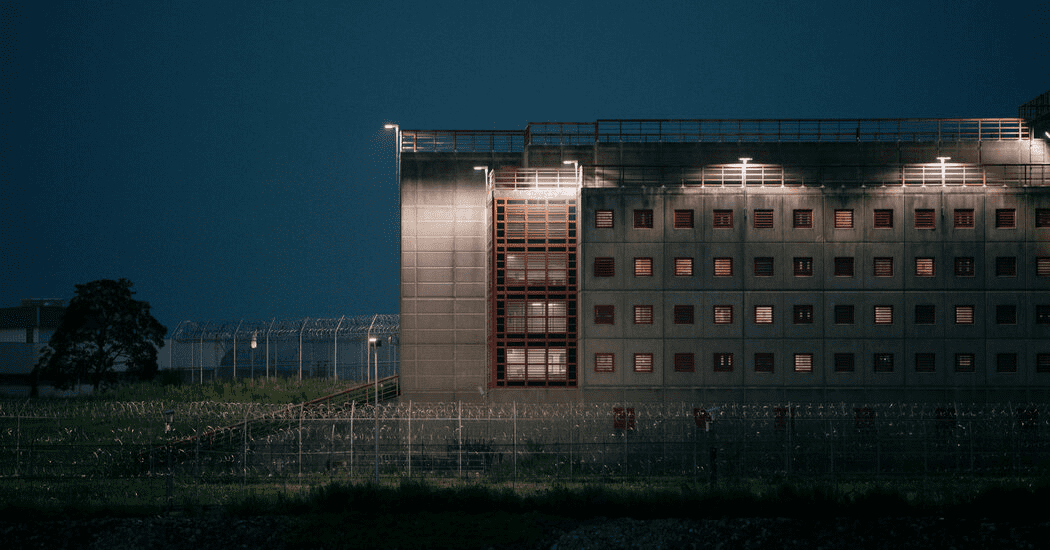
Over the course of Rikers Island’s history, The New York Times documented 53 inmate escapes from the island. These occurred in the 20th century, between 1964 and 1987.
One of the first recorded escapes was in 1964. The story involves an 18-year-old criminal who had violated his parole. To get to freedom, he swam nearly a mile through the cold waters of the East River, reaching the shore in the Astoria neighborhood of Queens.
According to correctional staff, the escape was carefully planned. The inmate took advantage of a moment when the guards’ vigilance was relaxed and managed to leave the prison grounds unnoticed. However, his freedom was short-lived—soon after reaching land, the escapee was spotted by passersby who notified the police.
Following this incident, an investigation into the circumstances of the escape was conducted, along with a review of the prison’s security levels, to prevent similar incidents in the future. But they still happened, time and again.
Repeat Escape Incidents from Rikers Island
In 1971, three inmates attempted to escape from Rikers Island, and in 1974, nine made a break for it. In the latter attempt, six inmates were caught immediately, but three had to be hunted down. The body of one of the escapees, 26-year-old Luis Roman, was found a few days later in the waters of the East River, near Tiffany Street in the Hunts Point section of the Bronx. It was revealed that Roman, who lived at 561 Fox Street, had been previously arrested on charges of theft and robbery.
The second inmate who escaped and was not immediately found was 23-year-old Obid Morales, of 285 Brook Avenue, Bronx, charged with robbery. The third was 25-year-old Vincent Todaro, a resident of 308 West 22nd Street, Brooklyn. According to the investigation, the escapees may have utilized a network of criminal connections.
Another escape wasn’t long in coming. In 1975, another group of inmates escaped from Rikers Island:
- Henry Barker, 27, of Brooklyn, convicted of murder and sentenced to 25 years to life;
- Charles Kenney, 39, of Brooklyn, charged with drug trafficking with bail set at $50,000;
- James Dutterson, 32, of Manhattan, charged with armed robbery;
- Robert Reiter, 29, of Brooklyn, also charged with armed robbery.
They presumably swam about half a mile and emerged in a remote area of LaGuardia Airport. Their wet clothes alerted Port Authority police, leading to the first alarm.
Responding officers detained two men they deemed suspicious. However, two others managed to get away. Notably, the escapees were wearing civilian clothes, which complicated their identification.
When airport police contacted the men’s facility at Rikers Island to ask about possible missing inmates, they were told everyone was accounted for. Receiving this response, the airport officers released the detained men, allowing them to walk away. It wasn’t until eight o’clock that the City’s Board of Correction officially announced the escape.
It was discovered that the four escapees used bedsheets and likely hacksaw blades to get out. Their absence was only discovered in the morning during a guard shift change.
Even after this, the escape attempts didn’t stop, continuing until the end of the 20th century. The attempts from Rikers Island demonstrated the flaws in the jail complex’s security system, revealing serious gaps in safety and coordination among correctional staff. Many of these incidents were made possible by insufficient inmate supervision, staff negligence, and outdated protective measures.
Beyond the escapes themselves, the slow reaction of the prison administration was alarming. Often, the absence of an inmate was discovered hours later, and sometimes only after the intervention of outside agencies. This pointed not only to shortcomings in the inmate tracking system but also to possible cases of internal assistance for the escapes.
The situation at Rikers Island has long been a concern for human rights advocates and city officials, and there were even calls to close the jail complex in 2016. Furthermore, there have been documented cases of abuse, neglect, and murder of detainees.
Cases of Abuse, Neglect, and Inmate Deaths

For decades, reports of brutality by correctional officers, inhumane living conditions, and deaths have cast a dark shadow over Rikers Island. Despite numerous calls for reform, even in the 21st century, Rikers remains a place of suffering for thousands of inmates, many of whom are awaiting trial and have not been convicted of any crime.
Violence is rampant at Rikers, much of it perpetrated by the staff themselves. Inmates, often young people from marginalized communities, are subjected to beatings, sexual assault, and prolonged solitary confinement.
For many inmates, a stay at Rikers Island is not just dangerous—it can be deadly due to neglect and inadequate medical care. Stories of medical malpractice have surfaced repeatedly, exposing the jail’s failure to provide basic healthcare to its inmates.
Despite years of federal oversight, investigative reports, and public outcry, the systemic violence at Rikers Island continues. Fueling this crisis are overcrowding, staff shortages, a lack of accountability, and a mental health crisis.
In response to the undeniable evidence of violence and neglect, activists and politicians have demanded the closure of Rikers Island. In 2017, New York City officials announced a plan to close the facility by 2026, replacing it with smaller, borough-based jails. However, logistical and political challenges have delayed the process.
Meanwhile, inmates continue to suffer, with reports of deaths at Rikers emerging every year. For many, the push to close the jail is a fight for justice and for the dignity of those who have lost their lives within its walls.