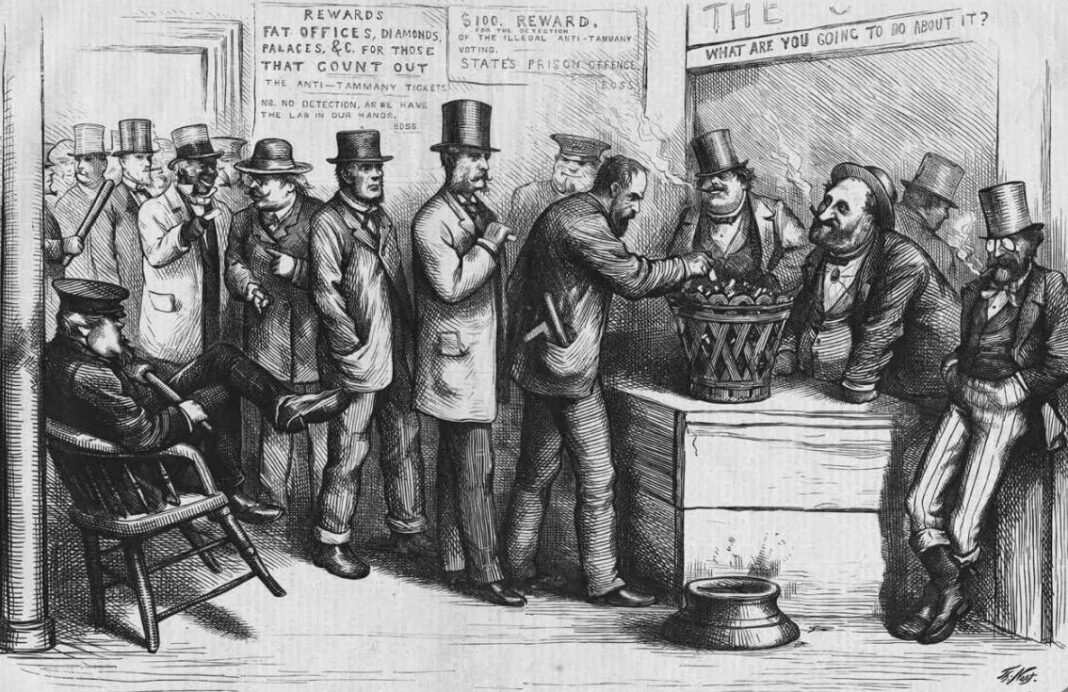

This is a story where politics was intertwined with myths, charity with corruption, and the struggle for power became inseparable from the life of New York. Tammany Hall grew from a fraternal society of artisans into a political “boss” that determined the city’s future—often through questionable methods, but with undeniable effectiveness. Read on new-york-yes.com to find out how it all unfolded.
The History of Early Tammany Hall
By the late 19th century, New York City was essentially just Manhattan—a crowded island where politics boiled alongside finance. It was here, in 1686, that the first municipal government appeared with the Common Council and six wards, but mayors were not elected for a long time; they were appointed until 1834.
The real shift occurred on May 12, 1789, with the birth of the Tammany Society—a fraternity inspired by the legendary Lenape Chief Tamanend. They called their meeting place the “Wigwam” and their leader the “Grand Sachem.” Behind the exterior of romantic Native American symbolism lay something much larger: a political tool that would eventually become America’s most famous urban machine.

Initially, the club focused on civic affairs, but with the arrival of Aaron Burr, it solidified into a magnet for Republicans. Burr used Tammany to drive the 1800 election, yet his era faded after his duel with Hamilton. Matthew Davis took the reins and transformed the fraternity into a true “machine,” creating a system of control capable of influencing any election. As its power grew, so did the scandals: corruption, fraud, and embezzlement. But Tammany skillfully survived by hosting patriotic ceremonies and forging new alliances.
The most potent resource became immigrants, especially the Irish. For them, Tammany was an employer, an advocate, and a pathway to citizenship, and for the organization itself, immigrants were a loyal electorate.
The Tumultuous Era of Fernando Wood
In the mid-19th century, New York experienced explosive growth—and new heroes and anti-heroes appeared on the political stage. One of the first was Fernando Wood—an ambitious, cunning politician who became New York’s first mayor in 1854 to rise directly from the machine’s ranks. By that time, he had already amassed a fortune through land speculation.
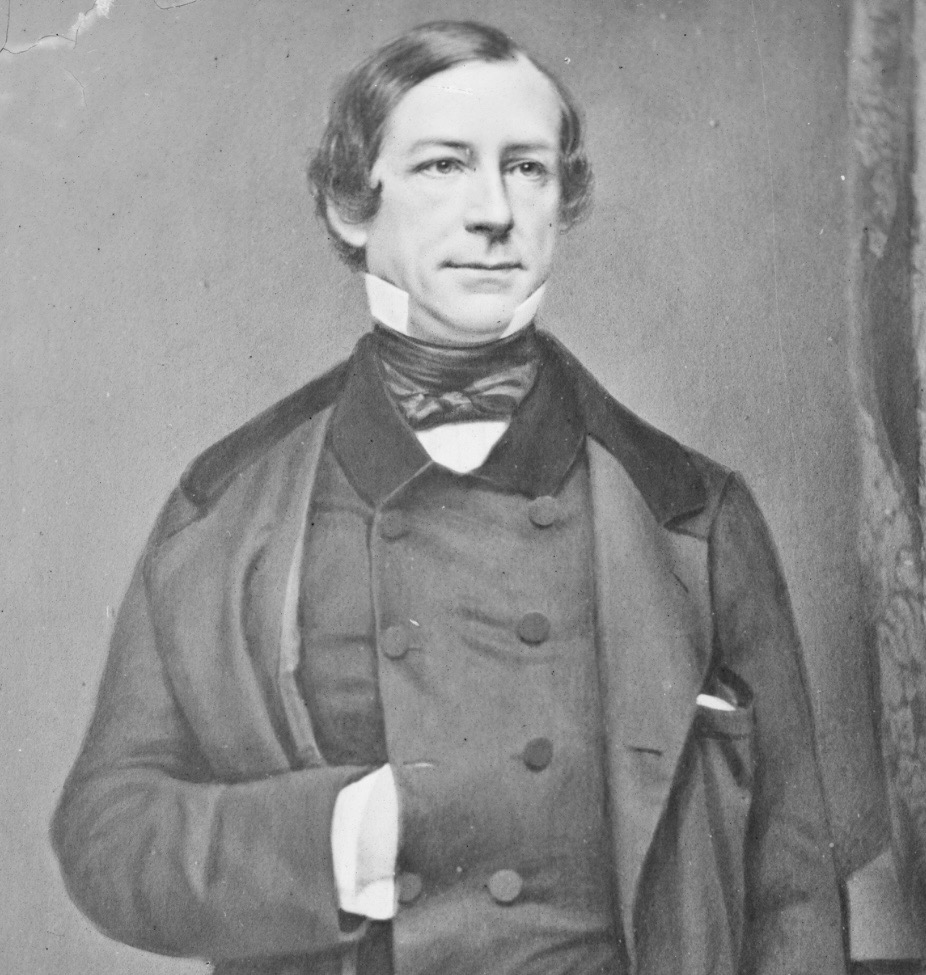
As mayor, Wood quickly showed that the rules were for others. He turned the city police into his own political instrument and the streets into the territory of the “Dead Rabbits” gang. When Wood ran for a second term, he so overtly challenged the system that he even cut police salaries for his own campaign and ordered officers not to interfere on Election Day. Power belonged to those who controlled the streets, and on that day, the “Dead Rabbits” controlled the streets.
Wood won another term, but his luck turned quickly. The elected Republican state government reformed the city system, created an independent Metropolitan Police Force, and curtailed the mayor’s powers. Clashes between the Municipal and Metropolitan police, street battles involving Wood’s gangs, and corruption scandals all undermined his authority. Even Tammany turned against Wood. He lost the election.
But Fernando Wood was not a man to give up. He left Tammany and created his own rival organization—Mozart Hall. This launched one of the most dramatic political wars in New York history. In 1859, Wood won again, mobilizing Irish and German immigrants to his side. Throughout the 1860s, Mozart Hall remained an influential force, especially among German speakers, and became a center of opposition to Tammany, which supported the war party during the Civil War. However, after the war, Mozart Hall gradually lost influence and disappeared from the political map by 1867.
The Tweed Era: When Corruption Became Systemic
After Wood’s fall, the leadership of Tammany passed to William Marcy Tweed—a master manipulator, an organizer of incredible scale, and the man who transformed the political machine into a veritable empire. It was Tweed who would lead Tammany to the height of its power and the most sensational scandal of the era.

Tweed held a seat in the State Senate, but his real power lay elsewhere—in his ability to control appointed positions in the city administration. His people controlled the courts, finance, public works, contracts, and construction. Through kickback schemes, fictitious invoices, and racketeering, Tweed and his associates siphoned colossal sums from the city—hundreds of millions in modern equivalent.
Biographers say Tweed’s system was an engineering marvel: meticulously planned, precise, and rigorously constructed. It simultaneously looted the budget and provided immigrants with work. This is why many poor Irish families remained unwavering supporters of Tammany, as few other aid structures existed at the time.
Under Tweed’s leadership, New York changed rapidly: the Upper East Side and Upper West Side developed, construction on the Brooklyn Bridge began, the foundations for Central Park were laid, and hospitals, orphanages, and the Metropolitan Museum of Art opened. At the same time, Tweed and his inner circle became unimaginably wealthy.
Tweed’s downfall began with an accident. In 1871, James Watson, the county auditor—the only person who knew all the financial secrets and schemes—died. His successor leaked documents to the Times, and the city saw the true scale of the embezzlement. Tweed was arrested in 1872. He escaped but was returned, and the former “boss” died in prison in 1878.
Tammany’s Revival After Tweed
After the collapse of the “Tweed Ring,” the next Grand Sachem was the honest Catholic John Kelly. He purged Tweed’s cronies, consolidated the leadership’s power, and by 1874, returned Tammany to control over city politics. In 1886, he was succeeded by Richard Croker. Croker adopted some labor-friendly tactics: clubhouses, precinct work, and attention to immigrant families. Respectable Tammany clubs appeared in every district, ensuring a new system of patronage and paving the way to the middle-class electorate.

In 1888, the organization supported Hugh Grant—the first New York-born Irish mayor. Together with him, Croker created a giant patronage network that made him the virtual master of the city by 1890. A new financing scheme, where businesses paid Tammany directly, ensured control over both the city and the state, where power was shared only by two bosses—Croker and the Republican Platt. However, state investigations in the 1890s exposed massive corruption and temporarily exiled Croker to Europe.
At the turn of the 20th century, Tammany remained the most powerful force but was forced to operate in an era of borough competition, the rise of expert groups, media influence, and periodic anti-corruption exposés. It was then that the modernized political machine emerged—with clubs, family events, ethnic outreach, and a complex internal hierarchy.
The Final Years of the Tammany Empire
With the support of Frank Costello and Tammany Hall, William O’Dwyer won the New York mayoral election in 1945 and was re-elected in 1949. However, the following year, a massive police corruption scandal involving bribery and the protection of gambling undermined his administration. The investigation led to mass firings in the police department and a complete replacement of the Civilian Division. Amid the scandal, O’Dwyer resigned.
In the late 1940s, Tammany made a brief comeback under the leadership of Carmine DeSapio—the first Italian-American boss, who sought to position himself as a reformer and openly commented on political decisions. He modernized and diversified the organization’s leadership, contributing to the victories of Robert Wagner Jr. and Averell Harriman. However, DeSapio’s close ties to Costello, who was convicted in 1954, later damaged his reputation. After Costello’s influence waned and political defeats in 1958, DeSapio’s authority never recovered. In 1961, Wagner decisively distanced himself from machine politics, and a united reform wing (whose leaders included Eleanor Roosevelt and Herbert Lehman) ousted DeSapio from local leadership. Further attempts to regain power failed, and by 1967, the Tammany Hall society officially ceased to exist.
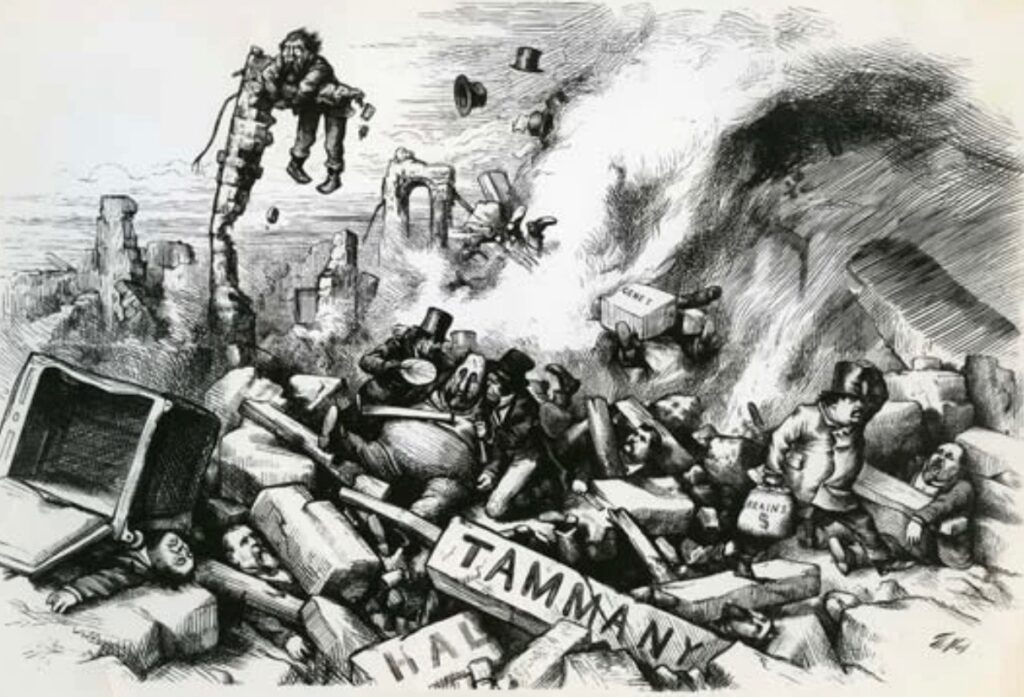
Like other urban machines, Tammany Hall served as a de facto social welfare system long before the New Deal. It assisted the poor and immigrants after fires, in courts, with rent, food, and jobs; supported families during important events; and helped with documentation and naturalization—in exchange for political loyalty.
Under Tammany’s rule, the city experienced a massive infrastructure boom: roads, bridges, and government buildings. The organization genuinely expanded access to housing, food, and medical and legal aid, helping millions of immigrants integrate into city life.
But at the same time, Tammany became the symbol of corruption. Elections were often accompanied by bribery and fraud, undermining confidence in the democratic process.
The history of Tammany Hall is an intertwining of social benefit and systemic corruption. The organization helped bring order to the chaos of a growing city and supported the most vulnerable, yet it also became the embodiment of the abuse of power. Its legacy serves as a reminder: even effective social structures require oversight to prevent them from devolving into a shadow government.