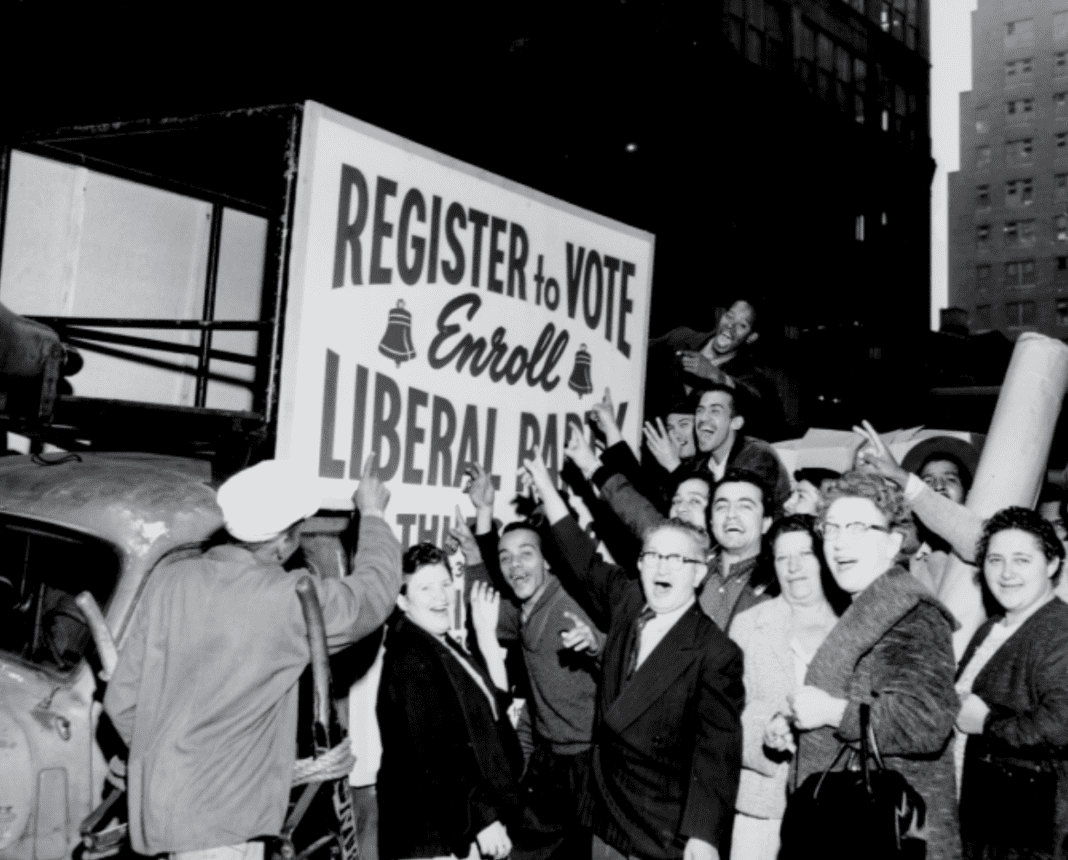

New York is the cultural, economic, and political heart of the United States. But beyond that, for decades it has been a center of liberal thought and progressive ideas. How did this metropolis transform into the liberal capital of the U.S.? The answer lies in its history of immigration, labor movements, political reforms, and cultural revolutions. Learn more at new-york-yes.
What is Liberalism?
Liberalism in the United States, especially in New York, has evolved over centuries, shaping the country’s political, social, and economic spheres. American liberalism, founded on the ideals of individual freedoms, social justice, and economic equality, has championed everything from civil rights to labor protections.
U.S. liberalism traces its roots to the Enlightenment era. Specifically, it is based on the core principles of democracy, emphasizing personal liberties and government accountability for social progress. Unlike classical liberalism, which prioritizes limited government and free markets, modern American liberalism supports a stronger role for government in ensuring economic security and social justice.
Key figures in early U.S. liberalism included New York natives like Franklin D. Roosevelt and figures like John F. Kennedy.
How Did New York Become So Liberal?
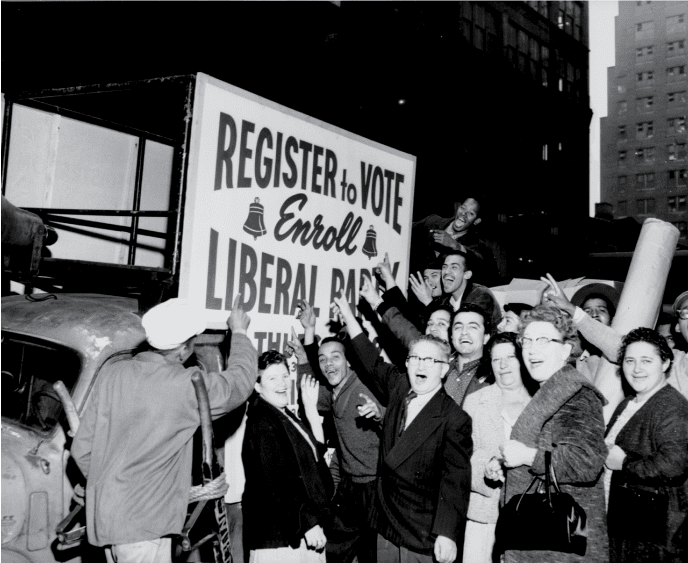
New York has always been a hub of liberal ideas thanks to its diversity, history of immigration, and active support for change.
From the late 19th to the early 20th century, New York welcomed numerous waves of immigrants from Europe, Asia, and other countries. These new settlers brought diverse cultures, languages, and political ideologies to the city. As a result, ideas such as workers’ rights, social justice, and political reform began to flourish. This was driven by the fact that most immigrants were laborers, working hard in construction, factories, and other industries. All of this contributed to the development of the city’s liberal identity.
Thus, by the 20th century, New York had become a true epicenter of labor activism. Numerous organizations were created to advocate for workers’ rights, demanding fair wages, reasonable working hours, and safer working conditions. They not only improved the lives of countless workers but also embedded progressive values into the city’s political fabric.
No less important was the influence of Tammany Hall. It was a driving force in the Democratic party in the early 20th century. While often associated with corruption and ties to mobsters, it’s worth noting that the institution also played a role in integrating immigrants into the political system, providing services in exchange for votes. Eventually, New York reformers achieved changes in this system, which contributed to a more transparent and inclusive city government.
Meanwhile, the 1920s were a cultural and intellectual explosion for the city. During this time, the Harlem Renaissance began to popularize African American culture. The public became more aware and actively began to advocate for everyone’s civil rights. In this same period, artists began to challenge societal norms and champion ideas like women’s suffrage and LGBTQ+ rights. These mass movements further solidified New York’s reputation as a modern, liberal city.
The Influence of the Liberal Party of New York
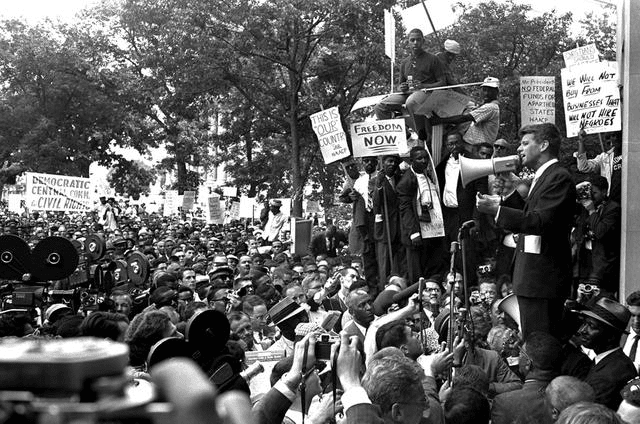
In 1944, the Liberal Party of New York was founded by the city’s union leaders. The party aimed to promote progressive policies and serve as a counterweight to more conservative elements in state politics. Although it no longer holds significant power in the 21st century, the Liberal Party played a crucial role in shaping New York’s politics in the mid-20th century.
The Liberal Party was one of the few minor political forces in New York State that played a unique role in shaping public policy. Thanks to state laws, it is allowed to use electoral fusion, which lets candidates run on multiple party lines simultaneously, with their votes being summed up. Although this practice exists in some other states, it is most actively used in New York. Since each party has a separate line on the ballot, candidates can appear on the list multiple times if they receive support from different political forces.
The Liberal Party predominantly used a strategy of cross-endorsement, nominating candidates from other parties who shared its ideas. It rarely put forward its own candidates. In this way, the party sought to influence the electoral process by supporting allies and ignoring those who did not align with its principles. A similar tactic is used in New York by the Conservative Party and the Working Families Party.
This type of party is unique in the U.S., and its platform supports a standard set of socially liberal policies: abortion rights, increased education spending, and universal healthcare.
In modern American politics, liberalism is often associated with the Democratic Party, although not all Democrats are liberals.
Additionally, there is much debate over whether publications like The New York Times and the New York Post are liberal or conservative. Yes, The New York Times is liberal. It has historically been this way, as the publication supports the Democratic Party and progressive ideas. Its editorial policy leans towards center-left views. In contrast, the New York Post is known for its conservative views. It is a tabloid that supports Republicans and often criticizes liberal political forces.
Liberalism in New York has shaped the nation, influencing laws, policies, and social attitudes. It remains a driving force for economic reforms, civil rights, and even environmental action. It’s worth noting that in the 21st century, New York’s government is largely Democratic, with progressive policies on various issues, from climate change to criminal justice reform. New York continues to support immigrants, provide numerous social services, and more, all of which underscore its rich liberal heritage.
In essence, New York’s transformation into the liberal capital of the U.S. is the result of its rich history of championing workers’ rights, enacting political reforms, and fostering cultural innovation.
- https://www.sparklymaidnyc.com/blog/newyork-is-liberal
- https://www.oah.org/process/soyer-the-liberal-party-of-new-york/
- https://www.liberalparty.org/LPofNY/policies-and-platform/brief-history-and-platform-of-the-liberal-party/
- https://www.quora.com/What-caused-New-York-City-to-become-more-liberal-and-why-are-other-parts-of-New-York-State-more-conservative
- https://www.jchs.harvard.edu/research-areas/working-papers/power-neighborhoods-new-york-city-growth-politics-neighborhood
- https://www.oah.org/process/soyer-the-liberal-party-of-new-york/