

The first organized intelligence network in U.S. history was created during the Revolutionary War under the direction of George Washington. Its main goal was to gather information about British military actions in New York, which was then under British control and served as a key military base. Read on new-york-yes.com for the story of the formation, activities, and contribution of this small group of patriotic enthusiasts in achieving independence from Britain.
The Creation of the Culper Spy Ring
After his experience in the French and Indian War, General George Washington understood well that even the bravest army is blind without reliable intelligence. The Continental Army, fighting against the powerful British Empire, desperately needed accurate information about the enemy’s movements and plans.
When the British captured New York and Long Island in the fall of 1776, Washington began the challenging process of creating his own spy network. Initially, Washington relied on individual volunteers. One of them was the young captain Nathan Hale, who went to New York under an assumed name. But he was quickly captured and executed on September 22, 1776. This tragedy showed Washington that successful espionage required an organized, well-masked system, not just the courage of a lone individual.
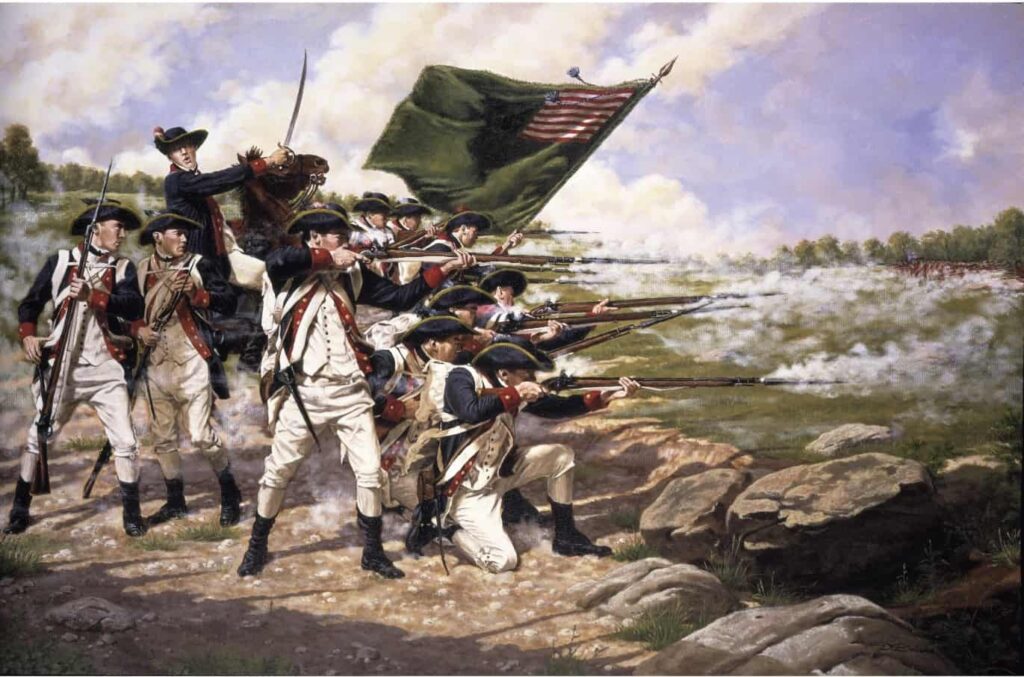
Washington tried to establish intelligence channels through William Heath and George Clinton, but their efforts remained sporadic. Eventually, the General turned to William Duer, who recommended the merchant Nathaniel Sackett. Sackett did send intelligence reports, but they proved inaccurate and too late.
In August 1778, sailor and officer Caleb Brewster from Connecticut joined the effort. He volunteered to deliver information from Long Island to Washington. His first report contained detailed data about the British fleet before the Battle of Rhode Island and was highly praised by the command.
Washington tasked General Charles Scott and his subordinate, Benjamin Tallmadge (a former classmate of Nathan Hale), with developing the initiative. It was Tallmadge, a young officer from Setauket, who suggested bringing his old friend, farmer Abraham Woodhull, into the network. Woodhull operated under the pseudonym Samuel Culper, named after Culpeper County in Virginia, where Washington himself had once worked as a surveyor. Thus, a permanent intelligence network spanning New York, Long Island, and Connecticut was born, which became known as the Culper Ring.
An Interesting and Dangerous Spy Life
Initially, network members simply masked their names. But later, to make it harder for the British to decipher their messages, Woodhull and Tallmadge introduced a numerical code. In 1779, for example, New York was assigned the number 10, and Setauket was 20.
In July of the same year, Tallmadge created an expanded codebook—a “pocket dictionary” with over 700 of the most frequently used words: for example, “Congress,” “fleet,” “Tory,” or even the word “murder,” which was assigned the number 387. All participants also received their own numbers: 721 for Tallmadge, 722 for Woodhull, and 723 for Townsend. A copy of this codebook is still preserved in the Library of Congress.
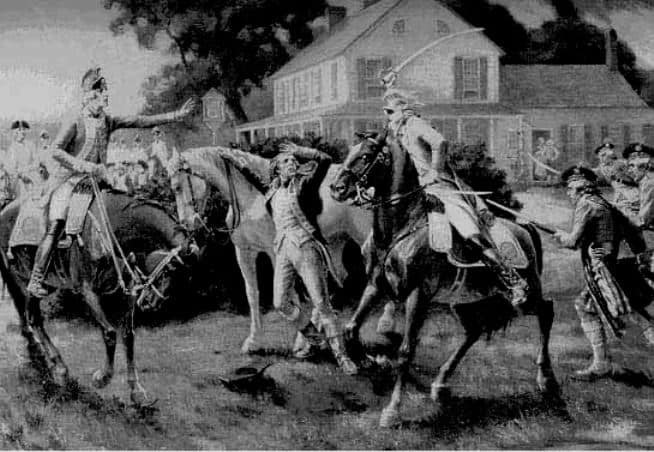
Another refinement was the “sympathetic stain”—invisible ink that only appeared after treatment with a special solution. It was invented by Dr. James Jay, the brother of future U.S. Supreme Court Chief Justice John Jay.
One of the most famous legends says that Anna Strong, Woodhull’s neighbor, signaled him using laundry hung in a specific order. A black petticoat meant Brewster had arrived, and the number of white handkerchiefs indicated the cove where she was waiting for the meeting. The story sounds romantic, but most researchers, including Belleroche and historian Beverly Tyler, consider it folklore rather than a confirmed fact.
The journalist James Rivington is another enigmatic figure in this espionage story. He was a well-known Loyalist and the owner of the Royal Gazette in New York, where British officers often gathered. Some authors believe Robert Townsend worked for him as a reporter; others suggest they even shared a coffee house. Rivington’s name appears in the Culper codebook, which led to speculation that he was an agent for Washington. Historians do not rule out that he passed information directly to Washington but was not part of the Culper network.
Another mystery of the secretive spy ring is the single mention of “Lady 355,” which appears in a letter from Woodhull to Washington in August 1779. One short sentence became the basis for numerous romanticized stories—about a mysterious spy, Townsend’s lover, imprisoned on the British ship Jersey. Modern historians dismiss this as fiction. Most likely, Woodhull meant Anna Strong, who helped him under the guise of a Loyalist. Other researchers suggest the woman could have been a social acquaintance in New York. Regardless, there is no documentary evidence of Agent 355’s existence.
The Impact of the Culper Spy Ring
By 1780, the Culper Spy Ring had become the true nerve center of American intelligence. From a small group of civilian agents, it transformed into an organized system capable of influencing the course of the war. George Washington himself repeatedly acknowledged that without these people, his army “would be groping in the dark.”
One of their most significant successes was a report intercepted in June 1780 regarding the British preparation for an offensive on Rhode Island. General Henry Clinton planned to attack French troops that were just arriving to support the Americans.
Tallmadge immediately passed the data to Washington, who quickly ordered his troops to take up defensive positions. Clinton, realizing that the element of surprise was lost, called off the attack.
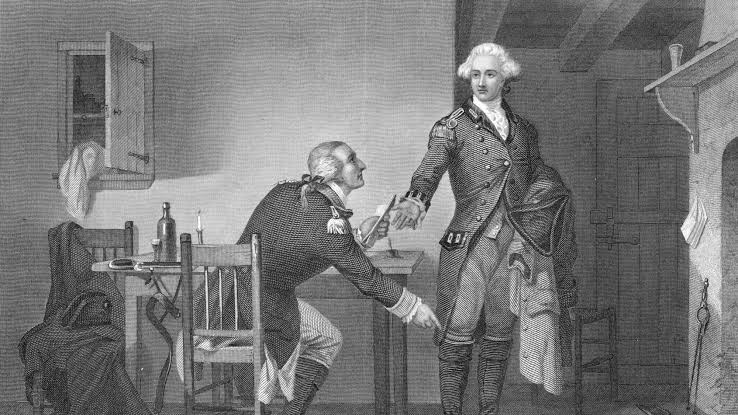
That same year, Culper agents helped expose a conspiracy that could have cost the U.S. its independence. The Ring intercepted information about suspicious activity between American General Benedict Arnold and British intelligence officer Major John André. Arnold, once a hero of the Battle of Saratoga, had secretly agreed to hand over the key fortress of West Point—the stronghold of the entire defensive line on the Hudson River—to the British. The agents’ warning gave Washington time to act. André was captured with the documents hidden in his boot, and Arnold himself fled to the British.
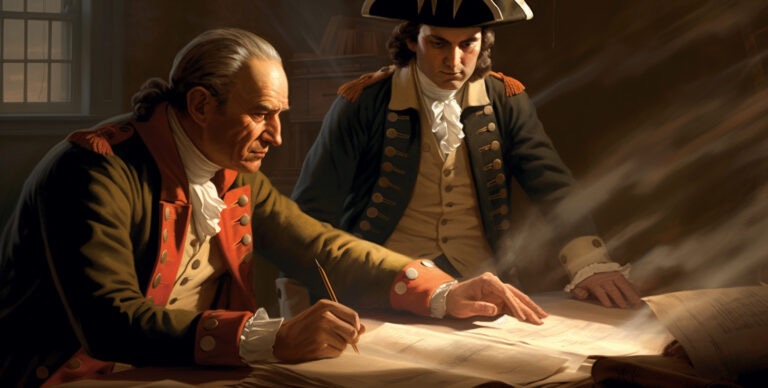
Beyond these dramatic episodes, the network systematically transmitted information about British troop movements, the fortifications of New York, warships, supplies, and enemy finances. Its agents prevented British plans to intercept the French fleet several times and even revealed Washington’s own whereabouts. Despite constant risks, internal disputes, and Washington’s dissatisfaction with the slow exchange of information, the Culper Ring became the most effective spy network of the war. This network served as the prototype for a disciplined, decentralized system with a clear structure, codes, and secure communication channels. The activities of the spies remained secret for decades after the war. The real identities of most agents only became known in the 19th and 20th centuries when historians uncovered the archives of Benjamin Tallmadge.
Cultural Influence
The story of the Culper Spy Ring has left a noticeable mark on culture, literature, and popular media.
As early as 1821, James Fenimore Cooper created characters inspired by Woodhull and Townsend in his novel The Spy. Later, the Culper motifs and characters appeared in Lucia St. Clair Robson’s novel Shadow Patriots and in the trilogy by Brad Meltzer (The Inner Circle, The Fifth Assassin, The President’s Shadow). The most famous screen adaptation was the AMC series Turn: Washington’s Spies (2014-2017), based on Alexander Rose’s book, Washington’s Spies: The Story of America’s First Spy Ring.
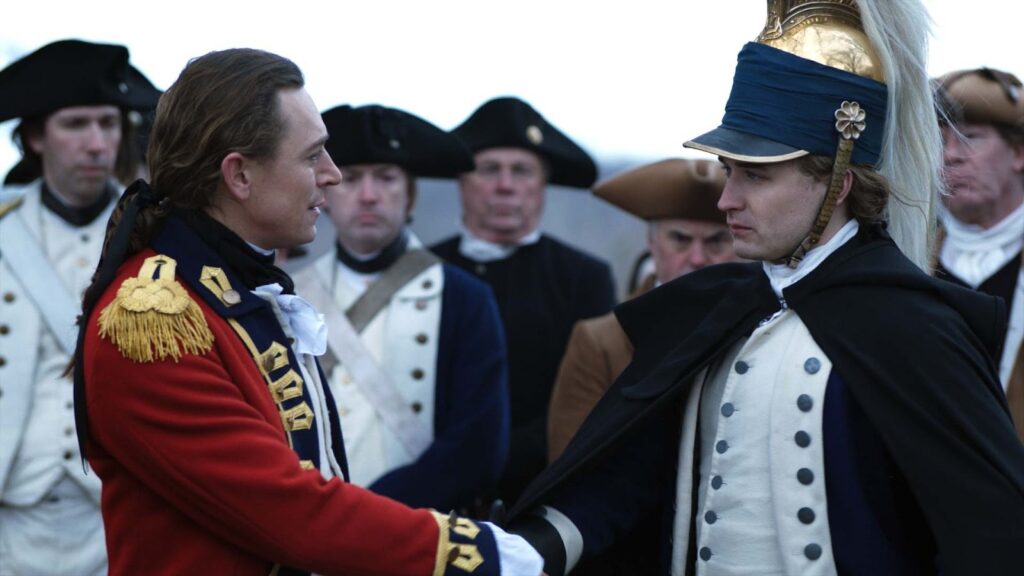
The series drew huge attention to the story of the Culper Ring, although it took significant artistic license, shifting dates, inventing characters, and distorting details about the lives of Woodhull and the other agents. The Ring is also mentioned in the series White Collar, in the episode “Identity Crisis,” where the plot revolves around the descendants of the Culper spies.
Despite the myths and artistic exaggeration, the story of the Culper Ring remains a symbol of patriotism, dedication, and the ingenuity of ordinary citizens who became intelligence agents for the sake of independence. Its legacy continues to inspire writers, filmmakers, and researchers, reminding us that in wars, the decisive role is often played not by cannons, but by wits and secret information.