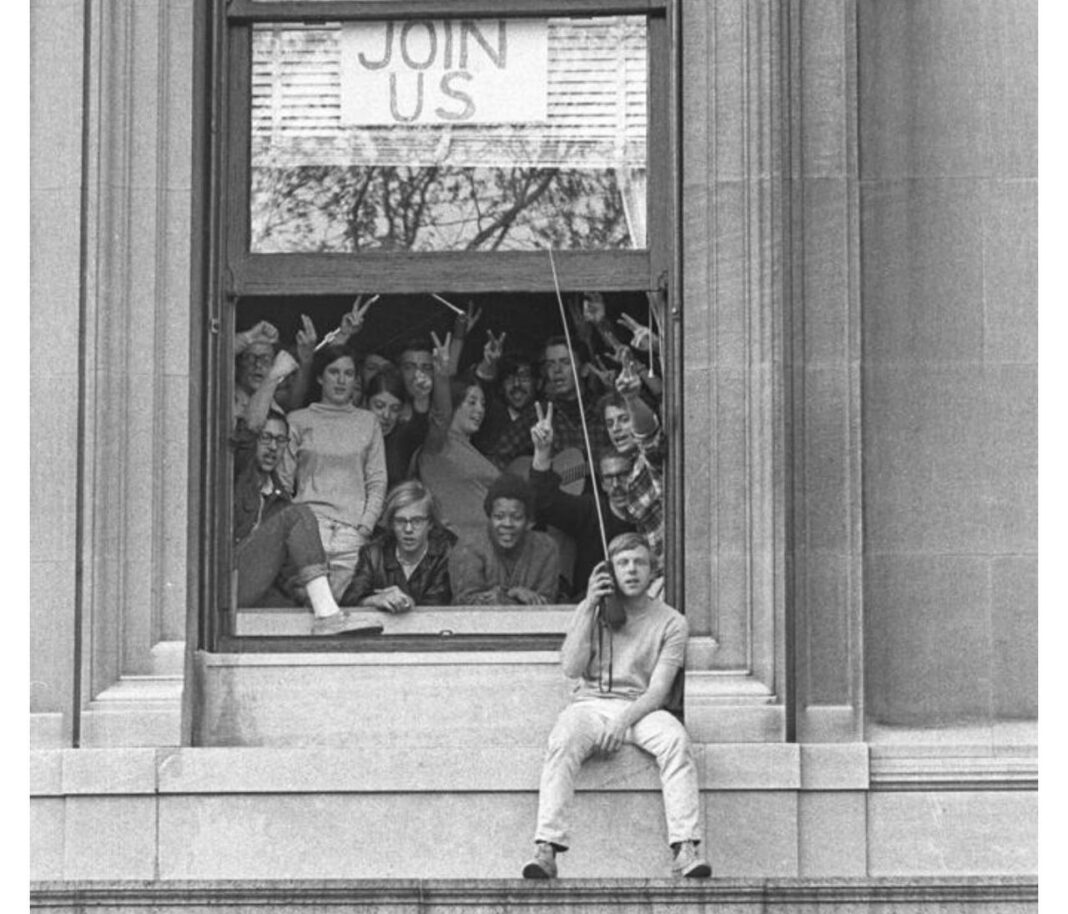

In 1968, Columbia University in New York found itself at the epicenter of the student protest movement that swept across the U.S. The primary reason for the protests was the university’s ties to government and military structures. Many students were dissatisfied with the university’s involvement in research for the U.S. Department of Defense, particularly concerning warfare and weaponry. Here is on new-york-yes.com the story of how students advocated for the U.S. to withdraw from the Vietnam War.
Peak Tension
Since 1965, articles in the student newspaper, the Columbia Spectator, had highlighted growing bureaucracy, an indifferent administration, and increasingly radical student sentiment. Against the backdrop of the Vietnam War, racial injustice, and cultural upheaval, youth demanded change—not gradually, but immediately.
Bans on rallies, attempts to suppress voices, and the presence of CIA and Army recruiters on campus only fueled the fire. By the fall of 1967, the administration had formally banned all protests inside university buildings, but this decree only hastened the inevitable confrontation. In those days, Columbia University resembled a miniature America—divided, confused, but full of energy. The administration didn’t know how to react. Faculty members tried to mediate but quickly lost credibility. Some professors supported the students but were afraid to say so publicly.
The final straw that “lit the fuse” was a discovery in the library. In early 1967, former Columbia student and Students for a Democratic Society (SDS) activist Bob Feldman stumbled upon documents proving that his university had official ties to the Institute for Defense Analyses (IDA)—a think tank that worked for the Pentagon. For students opposing the Vietnam War, this revelation was an explosion. Columbia University, which positioned itself as a center for free thought, was exposed as being linked to the military-industrial complex.
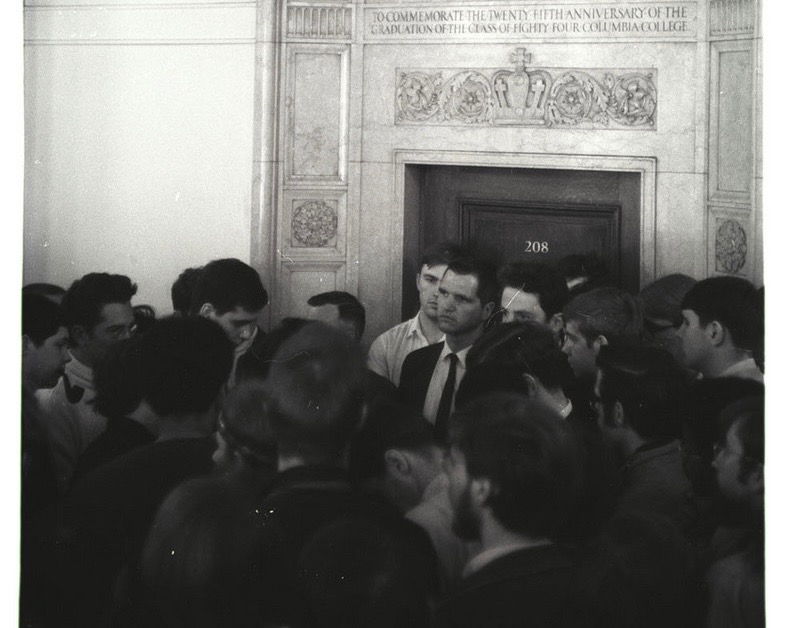
Feldman publicized the discovery, and within weeks, his name appeared in leftist publications. The FBIimmediately opened a file on the activist. From that moment on, a wave of anti-war protests began, turning the university into an arena of struggle between students, the administration, and the state. The SDS demanded that the university sever all ties with the IDA. When the administration responded with disciplinary action against six activists (the “IDA Six”), the protest only intensified.
The Occupation of Hamilton Hall
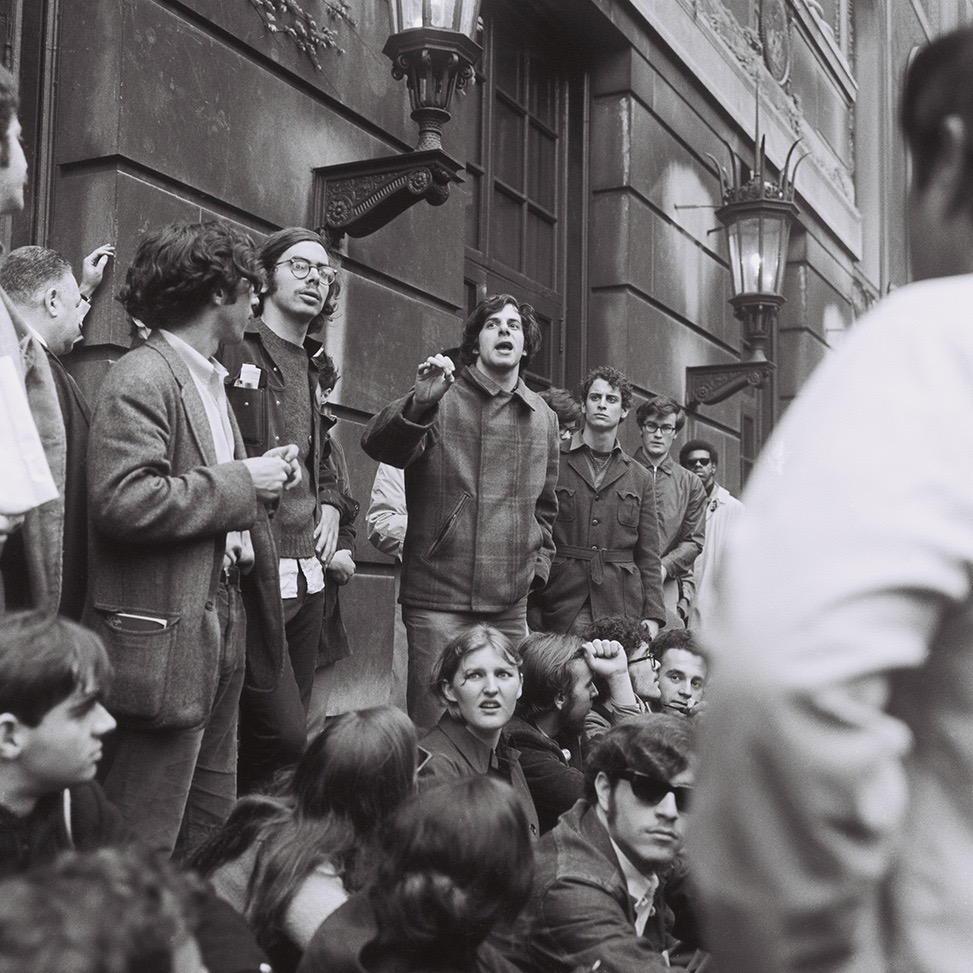
In April, after months of arguments, speeches, and fruitless meetings, students decided to act. On April 23, 1968, a crowd of students gathered by the Sundial—the heart of the campus. When security blocked access to the main library, the protesters marched to Morningside Park.
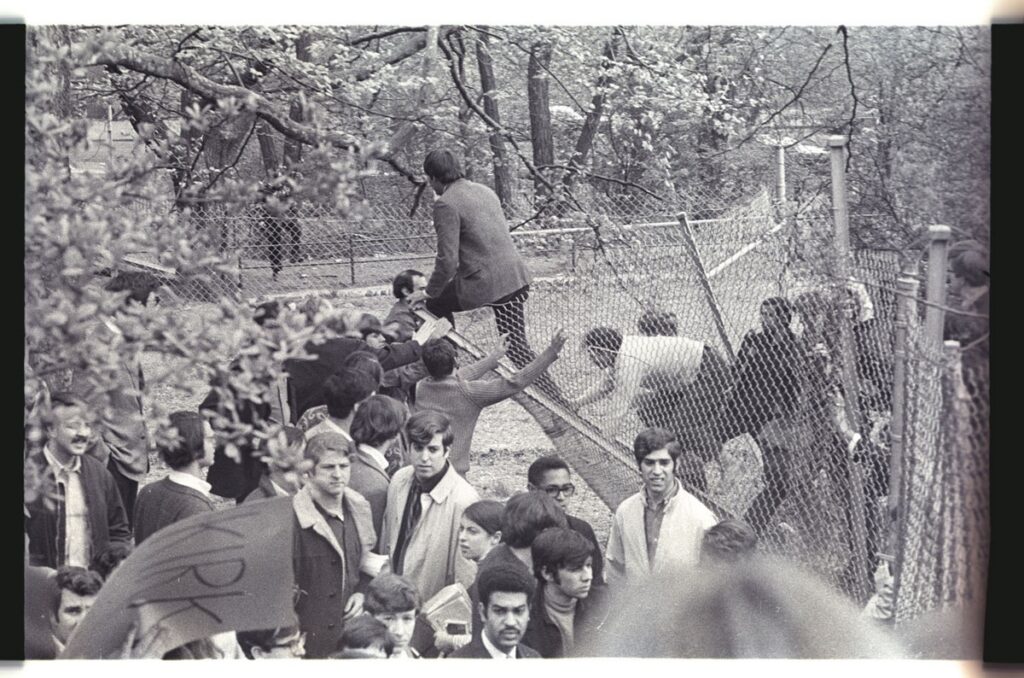
A skirmish with the police broke out on the lawn—symbolic, but sharp enough to spark a fire. One student was arrested. This became the point of no return. Activists decided they couldn’t wait any longer. They entered Hamilton Hall—an old building containing the offices and classrooms of Columbia College—and declared it a “liberated zone.” Thus began the legendary occupation.
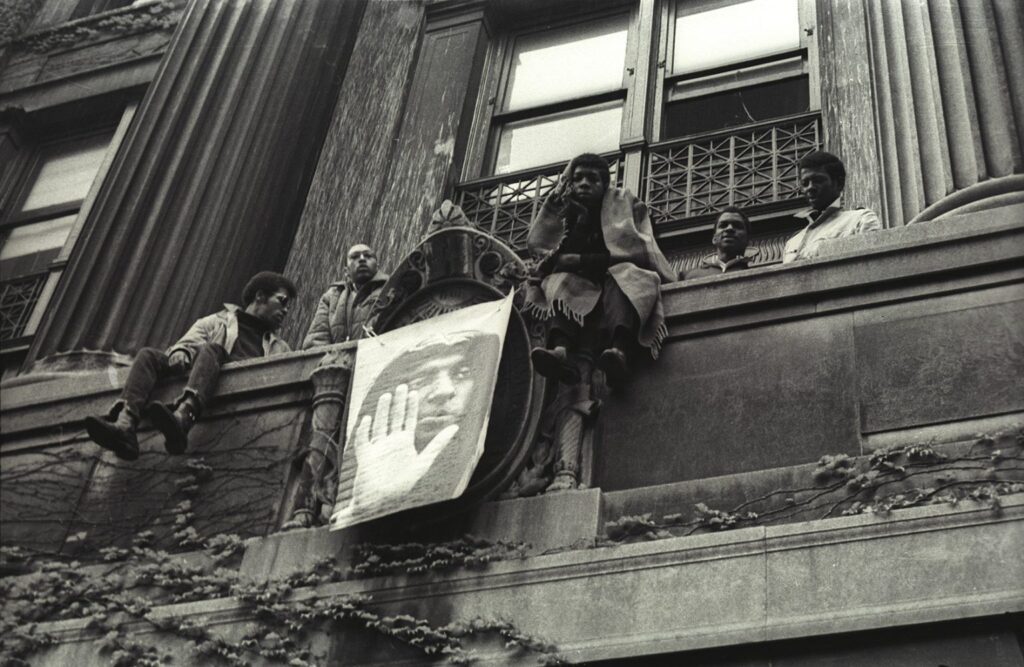
The next morning, an unexpected twist occurred. Sixty Black students asked their white allies to leave the building. They weren’t breaking the alliance, but they wanted autonomy. For them, it was not only a protest against the university but an act of self-respect, a protest against the very principle of racial inequality. They feared that a joint occupation would descend into chaos, and that any property damage would be used against them as proof of “Black student aggression.” Therefore, Black students remained in Hamilton Hall alone—disciplined, organized, and calm.
The white students, in turn, moved to other buildings—Low Library, Avery Hall (the architecture school), Fayerweather Hall, and Mathematics Hall. Each of these became a small world for a few days, with its own rules, slogans, kitchen, guards at the doors, and piles of leaflets scattered across campus. The white students spoke the language of the anti-war movement—they saw the university as part of a system feeding the war in Vietnam. The Black students spoke the language of self-determination—for them, the war started not in Vietnam, but here in New York, where their rights were violated.
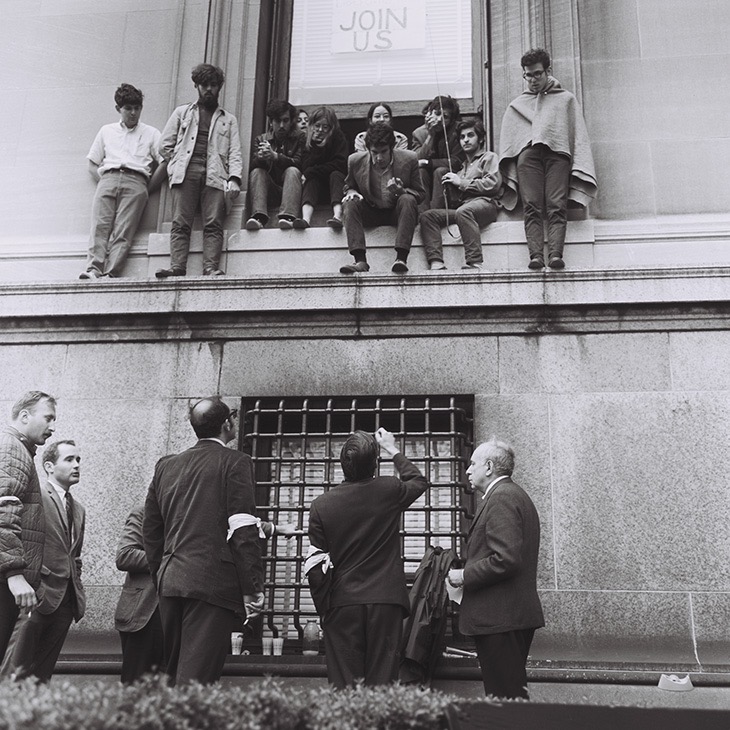
While Hamilton Hall remained a calm center, chaos reigned in Low Library. It was there that student Mark Rudd, one of the leaders, announced that the administration must meet the protesters’ demands, or Dean Coleman would be held hostage. Coleman, remaining calm, entered the building himself and stayed there overnight, sitting at his desk amidst barricades and posters. He was brought food and even talked with the protesters—and he was released a day later. The New York Times wrote that he “emerged without any sign of fear.”
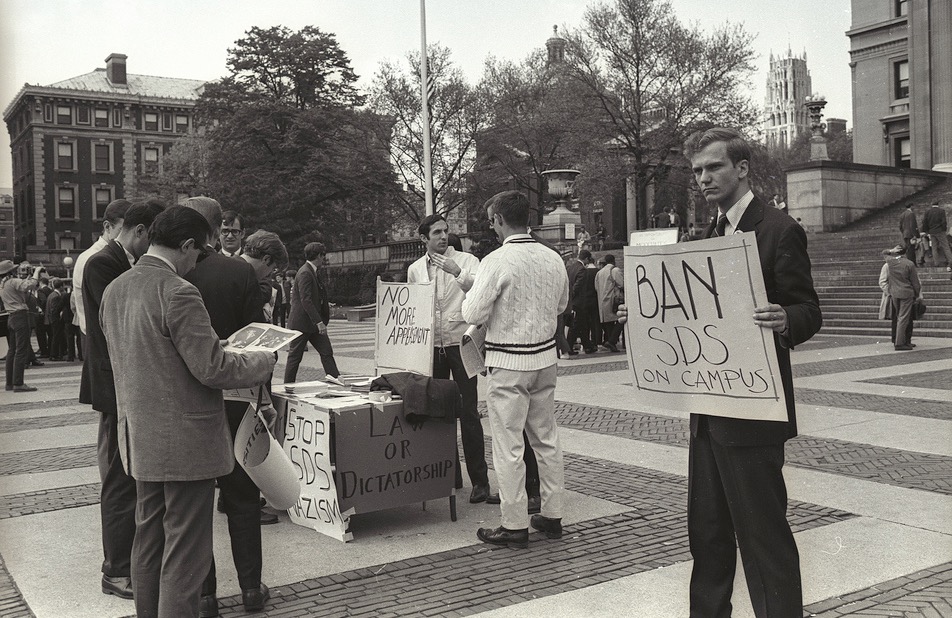
Local residents came to support the students, bringing food, words of encouragement, and hope. Signs hung near the doors: “Black and Harlem United,” “Power and Peace.” But not all students supported the occupation. A group called the “Majority Coalition” emerged—athletes, fraternity members, those who believed that the university was no place for revolution. They formed a human chain around the library, preventing both supplies and new protesters from entering.
The campus was divided. Some saw the occupation as a heroic act; others saw it as a threat to education. But despite the arguments, most recognized that the students had raised genuine, deep issues: race, war, justice, and power.
Suppressing the Protests
On the night of April 29–30, 1968, the student protests at Columbia University ended with a police crackdown. Early in the morning, hundreds of New York Police officers stormed the campus, using tear gas, batons, and brute force to clear the occupied buildings. The only exception was Hamilton Hall. It was cleared peacefully, thanks to the intervention of a group of African American lawyers waiting outside to defend the arrestees in court, as well as a special squad of Black police officers led by Detective Sanford Garelik.
The other buildings, where mostly white students were protesting, were cleared much more harshly. Over 130 people were injured in the clashes, including 132 students, 4 faculty members, and 12 police officers, and over 700 demonstrators were arrested. The clashes continued the next day, with students arming themselves with sticks and trying to resist. One police officer, Frank Gucciardi, suffered a serious injury—a student jumped on him from the second floor, leaving the officer disabled.
The Aftermath of the 1968 Columbia Protests
The student protests of 1968 achieved their main goal—Columbia University severed its ties with the Institute for Defense Analyses (IDA), which conducted research for the Department of Defense. The protests had significant personal consequences for students: at least 30 students were suspended. Faculty members, including Professor Carl Hovde, supported their demands but opposed criminal charges, though they admitted that the students had acted without proper justification.
The protests changed the campus culture. Some 1968 graduates refused to attend the official commencement ceremony, holding their own events at Low Plaza and Morningside Park. The protests showed that universities are not isolated from the social and economic conflicts surrounding them.
The Cox Commission, established to investigate the protests, identified weak communication channels among the administration, faculty, and students, and proposed the creation of a representative University Senate, which would allow students to participate in decision-making.
Financially, the university suffered: student applications, donations, and grants decreased. Restoring financial stability took about 20 years. The protests also influenced the subsequent development of American universities, contributing to a strengthening of liberal and left-leaning trends in higher education.
Thus, the events of 1968 not only changed the policies and infrastructure of Columbia University but also demonstrated the power of student movements to change society.
The occupation of Hamilton Hall lasted several days, but its echoes lasted for decades. It showed that even within one university, America was divided into two narratives: one white and privileged, and a second Black one, reclaimed with dignity. On those spring nights in 1968, Columbia became a stage where two movements met—the anti-war movement and the liberation movement. And both, despite their different paths, spoke the same truth: freedom does not begin with permission.