

She was called “the President’s eyes, ears, and legs”—she was the one who relayed direct information about the nation’s mood to Franklin (Roosevelt). And during World War II, Eleanor became the voice of moral support, calling for unity, faith in democracy, and the protection of human dignity. Her boundless energy, courage, and genuine compassion made Eleanor Roosevelt more than just a First Lady—she was a true moral authority of her time. Read on new-york-yes.com for more about the pivotal role this extraordinary woman played in the country’s destiny, particularly during the war.
From Loss to a Desire to Serve People
Eleanor Roosevelt was born on October 11, 1884, into a wealthy and influential family in New York. Her father, Elliott Roosevelt, was President Theodore Roosevelt’s younger brother, and her mother, Anna Hall, belonged to the old Livingston family. From childhood, Eleanor was surrounded by traditions of public service, philanthropy, and high moral standards.
However, her early years were marked by tragedy. Before Eleanor turned ten, she lost both parents: her mother died in 1892, and her father two years later. After this, the girl was raised by her maternal grandmother. Until the age of fifteen, Eleanor was educated at home by private tutors, and she was later sent to the Allenswood boarding school near London. There, she fell under the strong influence of the headmistress, the French intellectual Marie Souvestre, who instilled in her students independence of thought, social consciousness, and a drive for self-improvement.
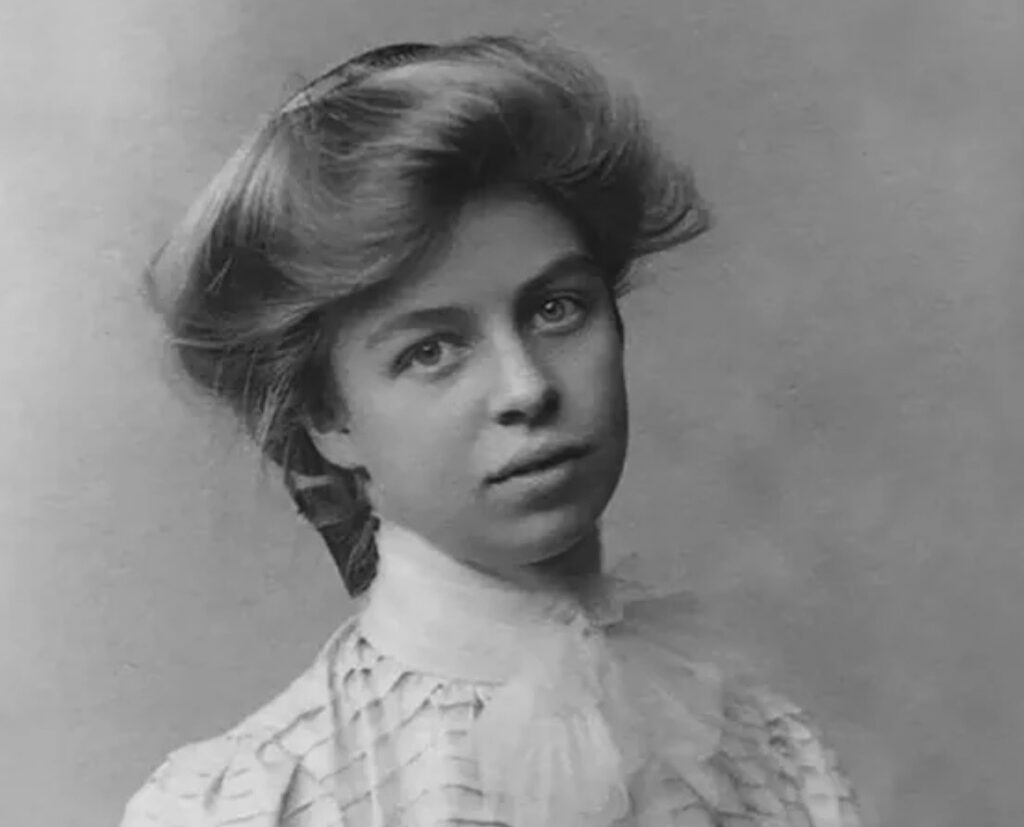
Eleanor would later call the years spent at Allenswood the happiest of her life. She blossomed as a person, gained confidence, and learned to view the world through the lens of humanism and justice.
In 1902, after finishing school, the young woman returned to New York to, as was tradition at the time, “come out” into society. But instead of the glamour of social salons, Eleanor felt a calling to serve people. She joined the Junior League—an organization of young women involved in social work—and began teaching immigrant children at a settlement on Rivington Street on the Lower East Side. Shortly after returning to New York, Eleanor met her distant cousin, Franklin Delano Roosevelt. Their relationship quickly blossomed into a romance, and on March 17, 1905, they married. The couple had six children: Anna Eleanor, James, Franklin Delano Jr., Elliott, another Franklin Jr., and John. One of the sons died in infancy.
An Unconventional First Lady
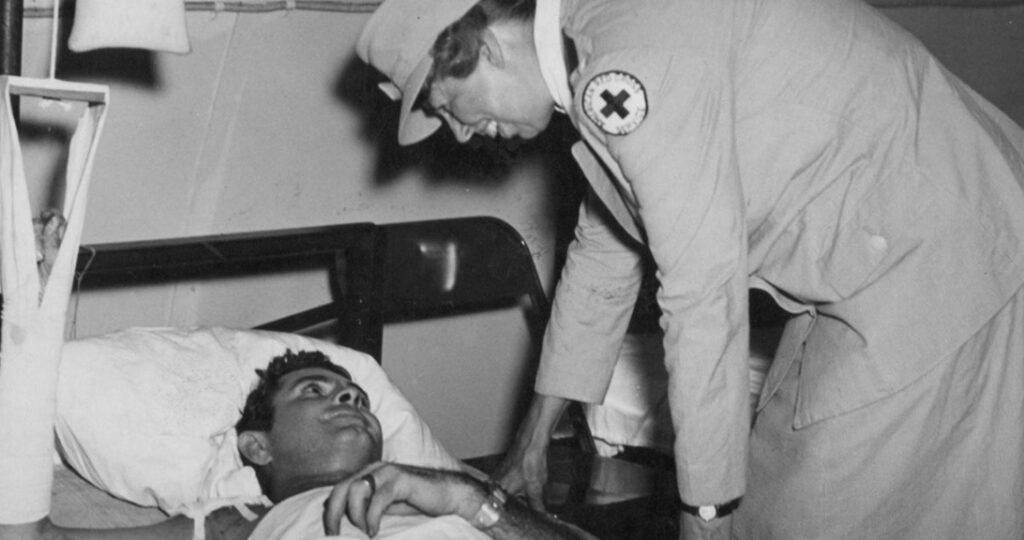
When the United States entered World War I in April 1917, Eleanor Roosevelt immediately resumed her volunteer activities. She helped wounded soldiers, worked with the Navy-Marine Corps Relief Society, and volunteered at a Red Cross canteen. This work gave her a sense of purpose and self-respect. She later recalled:
“I loved it… I just reveled in it.”
But 1918 was one of the most painful years of her life. Eleanor discovered her husband’s affair with her social secretary, Lucy Mercer. The betrayal deeply wounded her, but Franklin, fearing a political scandal, refused to divorce. From then on, Eleanor lived her own life, focusing on her children, education, and public service.
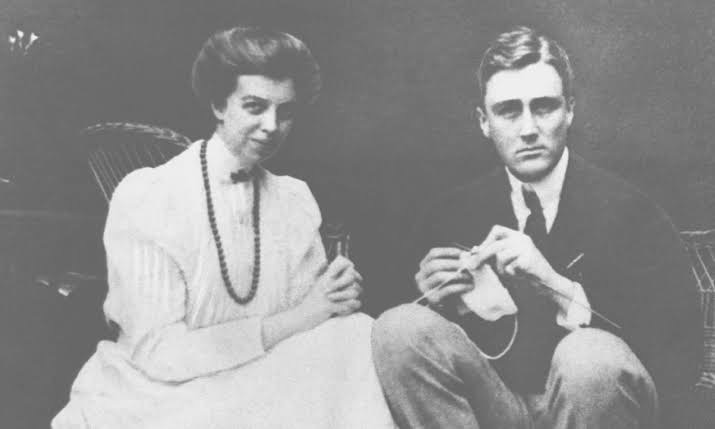
After Franklin’s unsuccessful bid for the vice presidency in 1920, Eleanor became increasingly involved in politics. When her husband contracted polio in 1921, she became his most reliable support. She joined the League of Women Voters, the Women’s Trade Union League, and the New York State Democratic Committee, studying laws, reading Congressional transcripts, and learning to analyze political debates.
When Franklin Delano Roosevelt became president in 1933, Eleanor modestly stated that the country would simply get an ordinary Mrs. Roosevelt. But it soon became clear: she was redefining the very concept of “First Lady.”
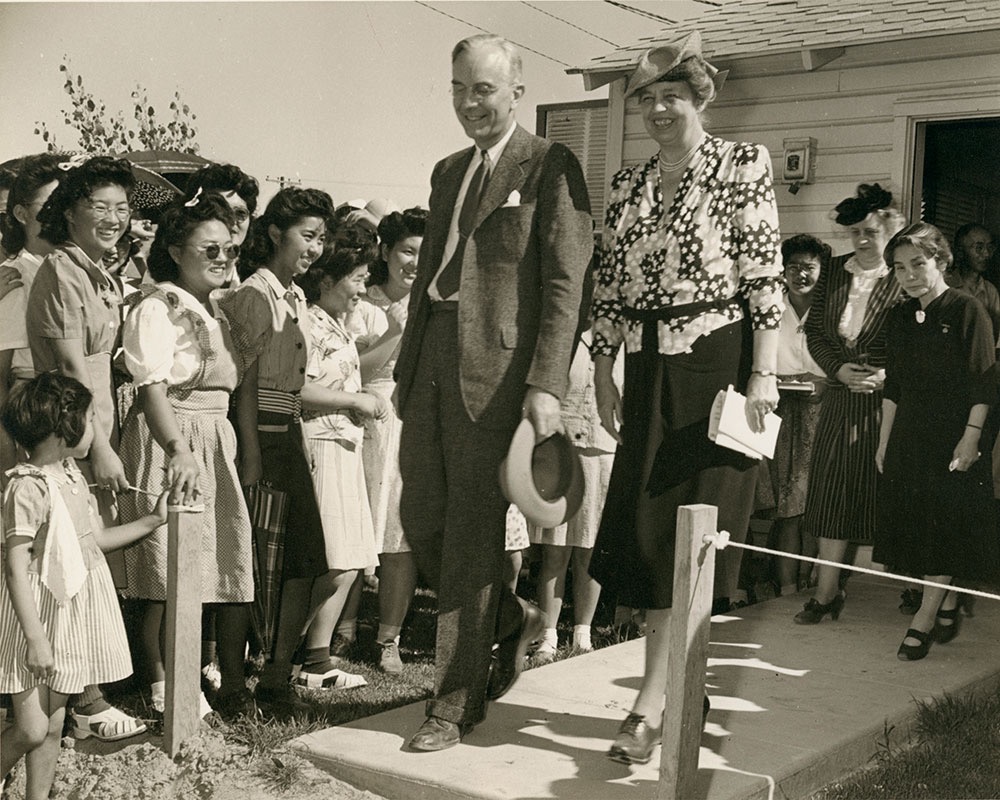
Eleanor instituted press conferences exclusively for women journalists, compelling news agencies to hire female correspondents for the first time. Over her 12 years in the White House, she held more than three hundred such meetings. Eleanor Roosevelt traveled across the entire country, visiting New Deal programs, talking with workers, farmers, and the unemployed, and personally reporting back to her husband about people’s real living conditions. She was not afraid to express her own opinion: in 1935, she began writing a daily syndicated newspaper column, “My Day,” where she wrote about politics, society, and personal impressions.
Eleanor demonstrated resolve on issues of racial equality. In 1939, when the Daughters of the American Revolution (DAR) prohibited African-American singer Marian Anderson from performing in their hall, she publicly resigned from the organization and helped arrange Anderson’s concert near the Lincoln Memorial. Over 75,000 people gathered for it—the event became historic. Another time, during a visit to Alabama, where authorities demanded racial segregation of seating in the venue, Eleanor brought her own folding chair and placed it directly in the aisle—symbolically uniting white and Black audience members.
A voice of support at the beginning of the war
When the planet was jolted again at the dawn of World War II, Eleanor Roosevelt was no longer just the First Lady—she became a moral compass for millions of Americans. Born into a family where presidential portraits were part of the family history, Eleanor witnessed America through two world wars and the Great Depression. And in each of these trials, she was not just a witness, but a driving force for change.
The same evening the President delivered his famous “Day of Infamy” speech, Eleanor went on the radio. Her address was quieter but no less important. She spoke about courage, the role of women and children in the upcoming struggle, and urged Americans not to succumb to fear but to act. Her voice, calm and firm, became a source of comfort amidst the anxiety for many.
Eleanor lived at the rhythm of the war—juggling official duties and the home front. Her energy seemed boundless. And although Eleanor herself confessed that she constantly felt she was doing too little, her activities gave millions the feeling that even in the darkest times, America had not lost its human face.
Eleanor Roosevelt did not wear a military uniform, but her front line stretched across the entire country—in schools, hospitals, factories, on the radio, and in newspaper columns.
Dangerous Journeys
In 1943, Eleanor Roosevelt traveled to the Pacific Front—where the most brutal part of the war was raging. Initially, her trip was planned only as a goodwill visit to Australia and New Zealand, but she insisted on seeing the real front—Guadalcanal and the neighboring islands. Her determination overcame the military’s doubts, and the First Lady ultimately visited 17 islands and met with over 400,000 soldiers.
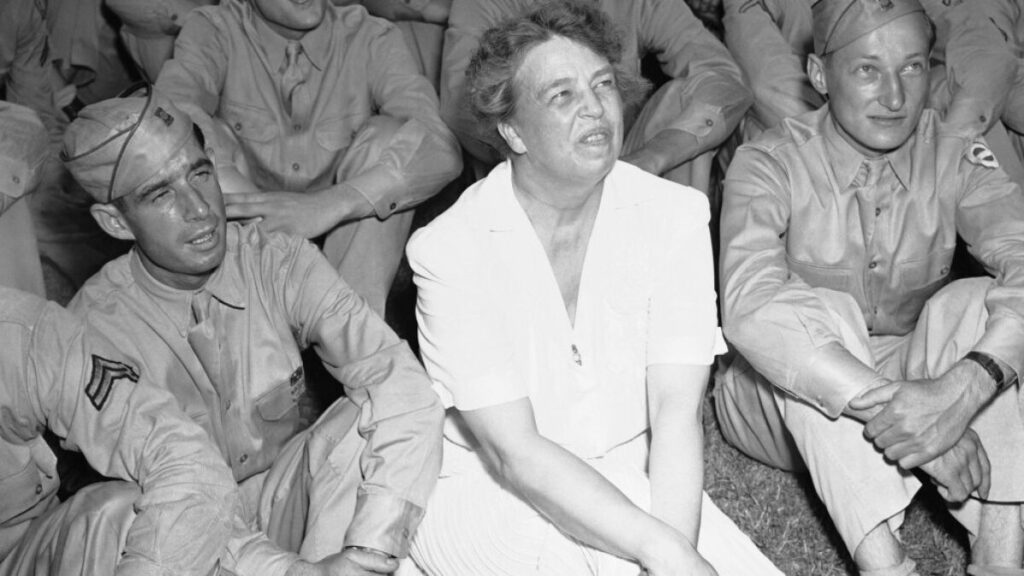
Eleanor was not looking for honorary receptions—she wanted to see how those fighting for victory lived and worked. She spent days in hospitals, talked with the wounded, promised to write to their families, and always kept her word. She met with women who were performing heavy military work on par with men, and she tirelessly wrote about it in her column, “My Day,” bolstering the morale of Americans.
Time magazine wrote:
“No other mother in the U.S. has seen so much of the panorama of war—the sweat, the boredom, and the suffering.”
She was unafraid of danger; her presence gave the soldiers the feeling that they were remembered at home, and her words reminded everyone that war is not just about battles but about human lives. Admiral William Halsey, who initially opposed her trip due to the risks, later admitted after meeting her:
“She did more good than any other person or group of civilians who passed through my area.”
For Eleanor, these journeys became more than just a test of courage—they strengthened her conviction that true peace can only be built when humanity does not forget the price of war.
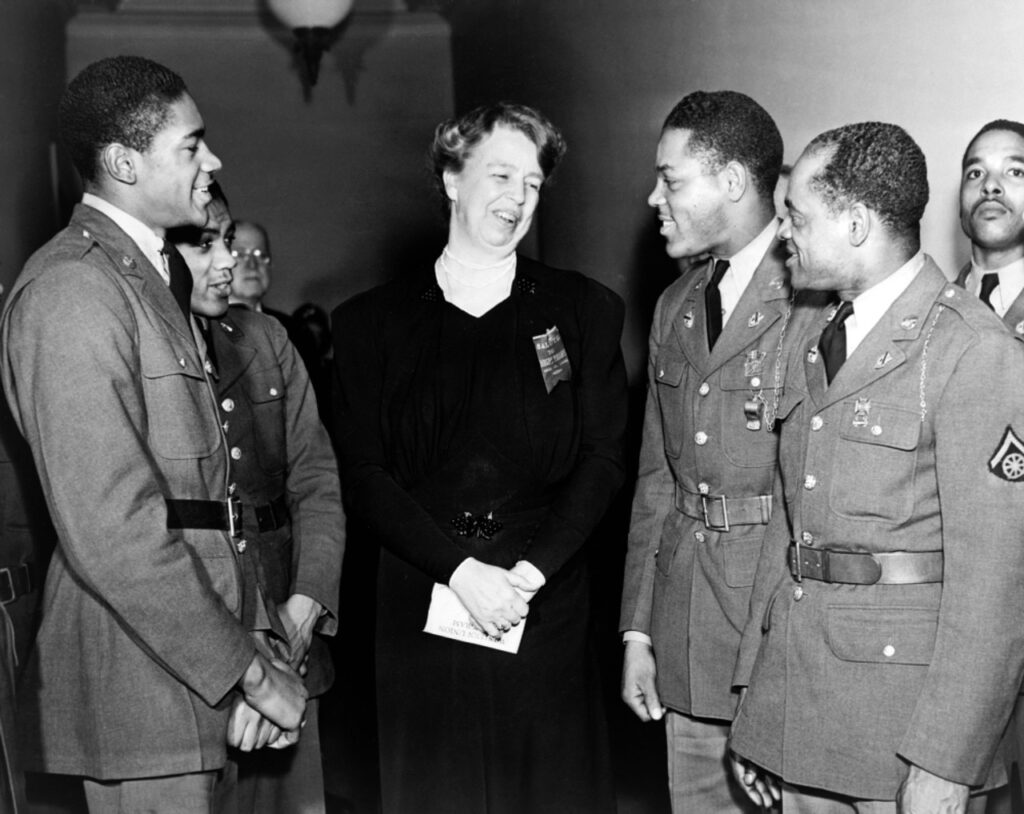
In one of her columns, she wrote:
“If the generation fighting today is to lay the foundation for a peaceful world, all of us who have seen war at close range must remember what we have seen and bring the spirit of a crusade into all our work.”
After the War
After the death of President Franklin Delano Roosevelt in April 1945, Eleanor did not disappear from public life—on the contrary, she began a new phase of her mission. President Harry Truman invited her to be part of the American delegation to the newly established United Nations. There, she chaired the Commission on Human Rights and worked on the Universal Declaration of Human Rights, which was adopted by the General Assembly on December 10, 1948. This declaration became the moral code of the post-war world and Eleanor Roosevelt’s greatest legacy.
After resigning from the delegation in 1953, she did not stop, becoming an active leader in the American Association for the United Nations, chairing its Board of Governors, speaking at international conferences, and conducting extensive humanitarian work.
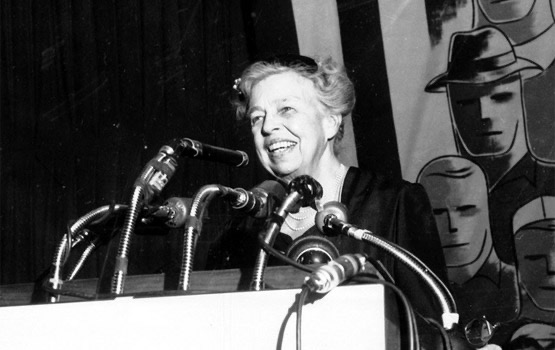
As during the war, Eleanor remained a tireless traveler. She was seen in dozens of countries, meeting with world leaders and speaking to students, journalists, and volunteers. She wrote books, gave lectures, and her beloved column, “My Day,” ran until the final weeks of her life.
Eleanor Roosevelt died of a rare form of tuberculosis on November 7, 1962. She was buried next to her husband in the Rose Garden of the family estate in Hyde Park, on the banks of the Hudson River.