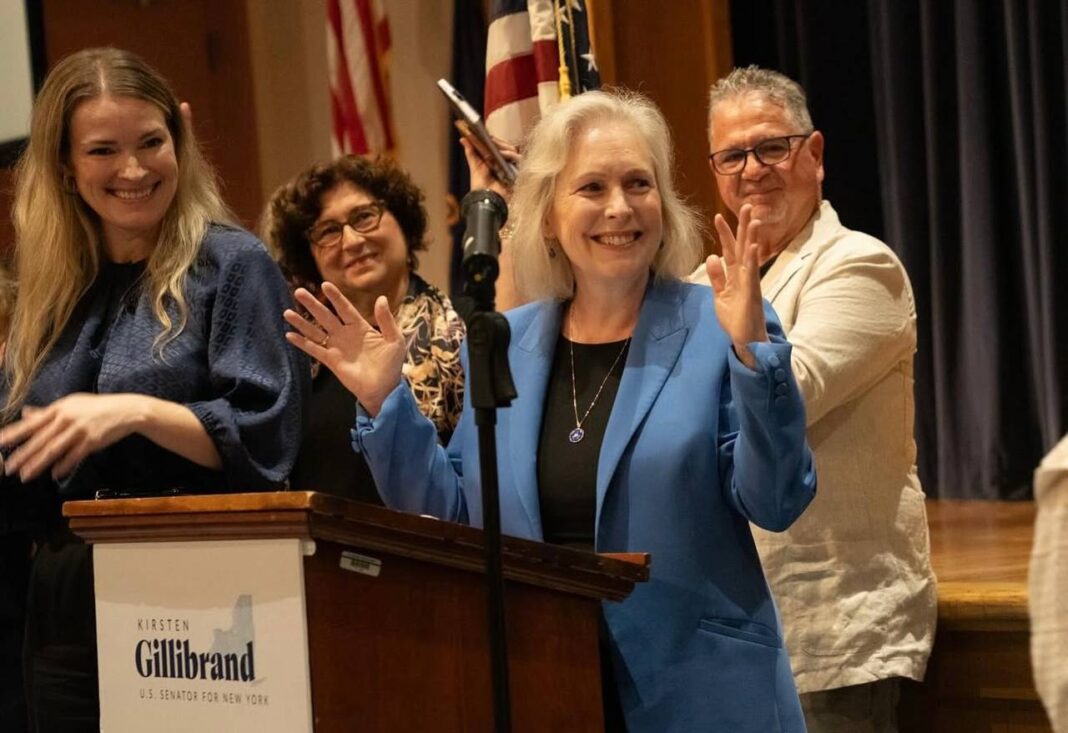

In 2009, Kirsten Gillibrand entered the U.S. Senate as a representative for New York, and just a year later, voters confirmed they wanted her in that position going forward. In 2024, she confidently secured another victory, completing her journey from “the girl from Albany” to an influential national political figure. Her story is the path of a person taught from a young age not to stay silent but to act, and who ultimately became a voice that inspires others. Read on new-york-yes.com for more about Kirsten Gillibrand’s life and career.
The Girl from Albany
Kirsten Elizabeth Rutnik was born on December 9, 1966, in Albany—a city where politics rang louder than church bells, and family dinners often turned into impromptu debates. Her mother, Polly Noonan Rutnik, was a lawyer with a warrior’s spirit; she even held a black belt in karate. Her father, Douglas Rutnik, worked as a lawyer and lobbyist, well-versed in the dynamics of New York’s political theater. But the biggest influence on the future Senator was her grandmother—the legendary Dorothea “Polly” Noonan. She was the heart and engine of Albany’s women’s political movement, a close associate and de facto political advisor to the influential Mayor Erastus Corning II. He was a frequent guest in the Rutnik home—so frequent that young Kirsten sincerely believed he was a member of the family.

The path of the future politician began at the prestigious Emma Willard School, known for strict discipline and high expectations. Then came Dartmouth College. There, Kirsten first encountered overt sexism, but she was not intimidated; on the contrary, she became more determined. She majored in Asian Studies, traveled to China, and even interviewed the Dalai Lama, as if sensing her future in political dialogue even then.
After graduating from Dartmouth, she continued her education at the UCLA School of Law. Upon earning her J.D., Kirsten worked at the influential New York firm Davis Polk & Wardwell, where she defended corporate clients—including the tobacco giant Philip Morris during high-profile federal investigations.
Choosing the Political Path
However, her true calling lay outside the walls of law offices. Kirsten was increasingly drawn to political life—and the decisive push came from a Hillary Clinton speech:
“If you give decisions to others—don’t complain about the result.”
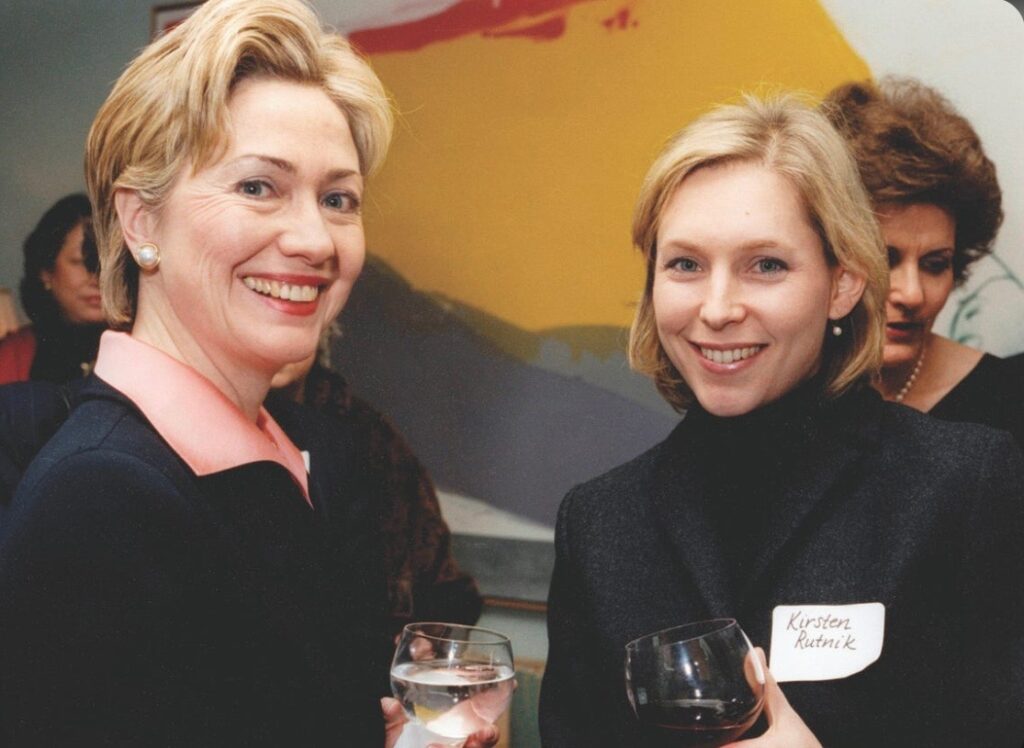
These words struck a chord with her. Thus, the lawyer transitioned into an advisor at the Department of Housing and Urban Development, where she worked under Andrew Cuomo. Kirsten later joined Hillary Clinton’s victorious Senate campaign in 2000. And in her personal life, she took a new step: she left private practice, married Jonathan Gillibrand, and took his surname.
Clinton became a mentor to Kirsten; she was the one who advised Gillibrand not to rush and to wait for the 2006 election, when her chances would be much better.
In 2005, Gillibrand left law practice and announced her run for the House of Representatives in a traditionally Republican district—a place where Democrats hadn’t won in almost a century.
She campaigned “in the field”: meeting with farmers, veterans, and young families. Hillary and Bill Clinton were on her side, but her ability to listen and speak simply to people was the deciding factor.
In the final days before the election, a scandal surrounding John Sweeney—her opponent, who was accused of domestic violence—sharply changed the situation. Sweeney’s team tried to deny the claims, but trust had already eroded.
Gillibrand won with 53% of the vote—breaking a century-long Republican hegemony in the district. It was a breakthrough that made her one of the most visible new faces in the House of Representatives.
In Washington, Kirsten quickly established herself as an independent-minded Democrat. She joined the moderate Blue Dogs caucus, voted against the 2008 financial bailout, advocated for increased oversight of federal programs, and supported a number of more conservative initiatives—from gun issues to immigration.
Gillibrand became the first member of Congress to fully disclose her daily schedule, earmark requests, and financial documents. Such transparency was rare at the time and earned her a reputation as an honest and accessible politician.
In 2008, Gillibrand won a second time—by a massive margin, despite an expensive and aggressive challenge from Republicans. In a district where Democrats were once given no chance, she had become recognizable, authoritative, and popular.
A Senatorial Career
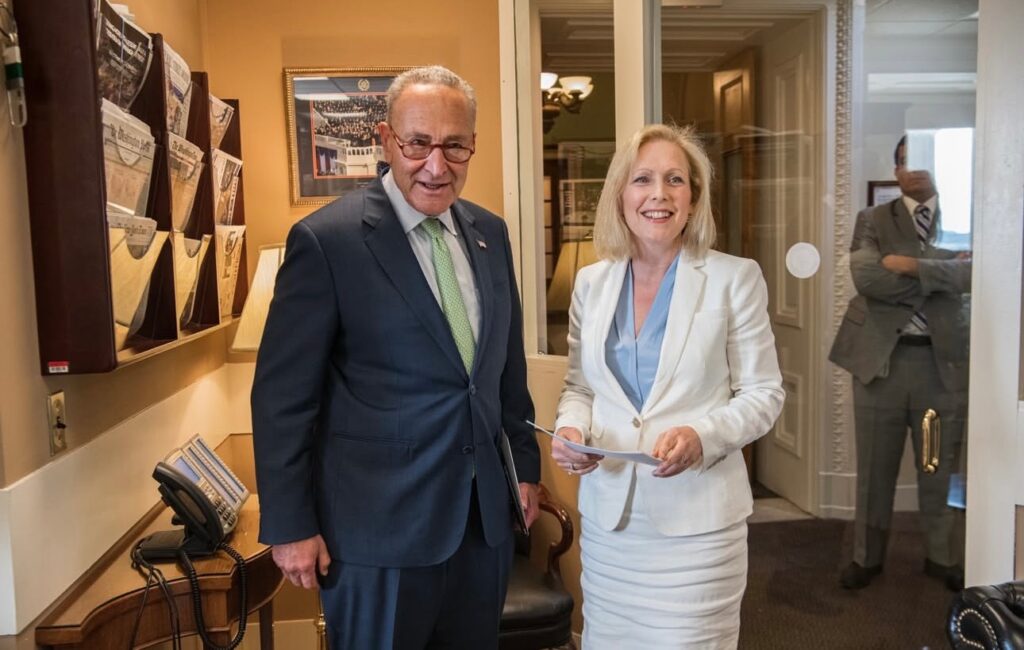
When Barack Obama announced Hillary Clinton as the future Secretary of State in December 2008, New York paused in anticipation: who would take her place in the Senate? Among the high-profile names, from Andrew Cuomo to Caroline Kennedy, the Congresswoman from upstate New York was quietly and persistently making her case. Kirsten Gillibrand met with Governor David Paterson, arguing that she was capable of winning even in conservative districts and would be a reliable ally to Chuck Schumer.
On January 23, 2009, her name was announced. The reaction was explosive: upstate rejoiced, but New York City shrugged in surprise, as the new Senator was little known. Before her appointment, Gillibrand clearly outlined her position on LGBTQ+ rights, winning over activists who had initially criticized her. On January 26, she was sworn in, becoming the youngest Senator in the new session at 42 years old.
In the 2010 Democratic primary, almost no one dared to challenge Kirsten. Her only opponent was lawyer Gail Goode—Gillibrand won and easily defeated Republican Joseph DioGuardi in the general election. In 2012, she ran for her first full term as a progressive reformer, securing a record 72.2% of the vote. In 2018 and 2024, Gillibrand was re-elected easily, now as a national political figure.
Initially a moderate Congresswoman, Kirsten Gillibrand quickly changed course in the Senate. She supported Sotomayor, advocated for the repeal of Don’t Ask, Don’t Tell, and became a key force in its elimination in 2010. In 2011, she secured the passage of a bill guaranteeing medical care to 9/11 responders and victims, cementing her national recognition.
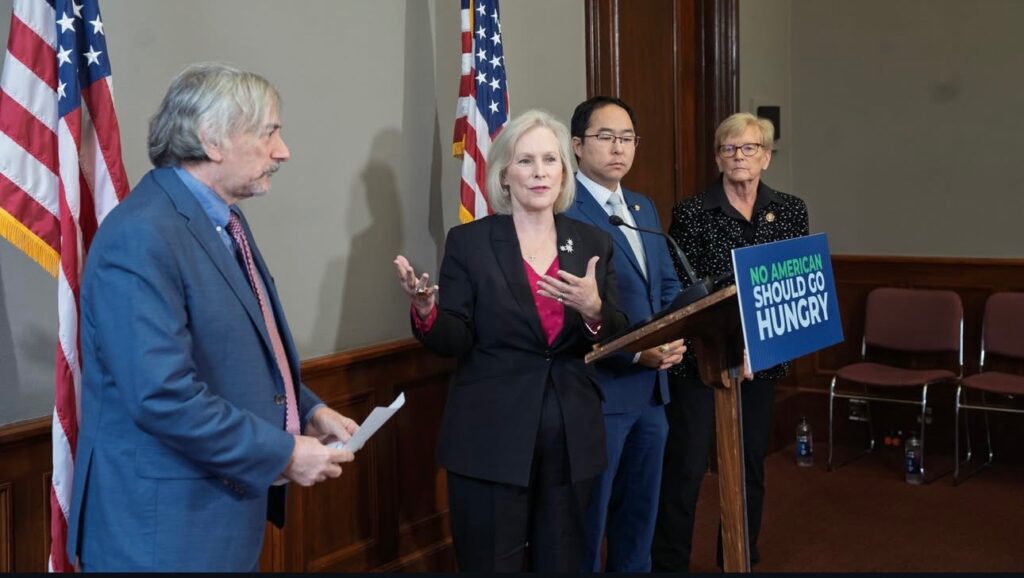
Since 2013, Gillibrand has spent a decade fighting for military justice reform, successfully pushing legislation in 2022 to mandate that sexual assault cases be handled by independent prosecutors. Her FAMILY Act project still symbolizes the movement for paid family leave. She has actively worked on criminalizing illegal gun trafficking and aiding veterans.
Gillibrand skillfully built campaigns based on people’s stories: veterans, first responders, victims of assault. She was not afraid of conflict and won the favor of progressive movements. In 2014, TIME included Kirsten Gillibrand in its list of the 100 Most Influential People, and during the Trump administration, she actively blocked his policies, maintaining a low voting coincidence rate. Due to her persistence, Gillibrand secured over half a billion dollars for important New York projects.
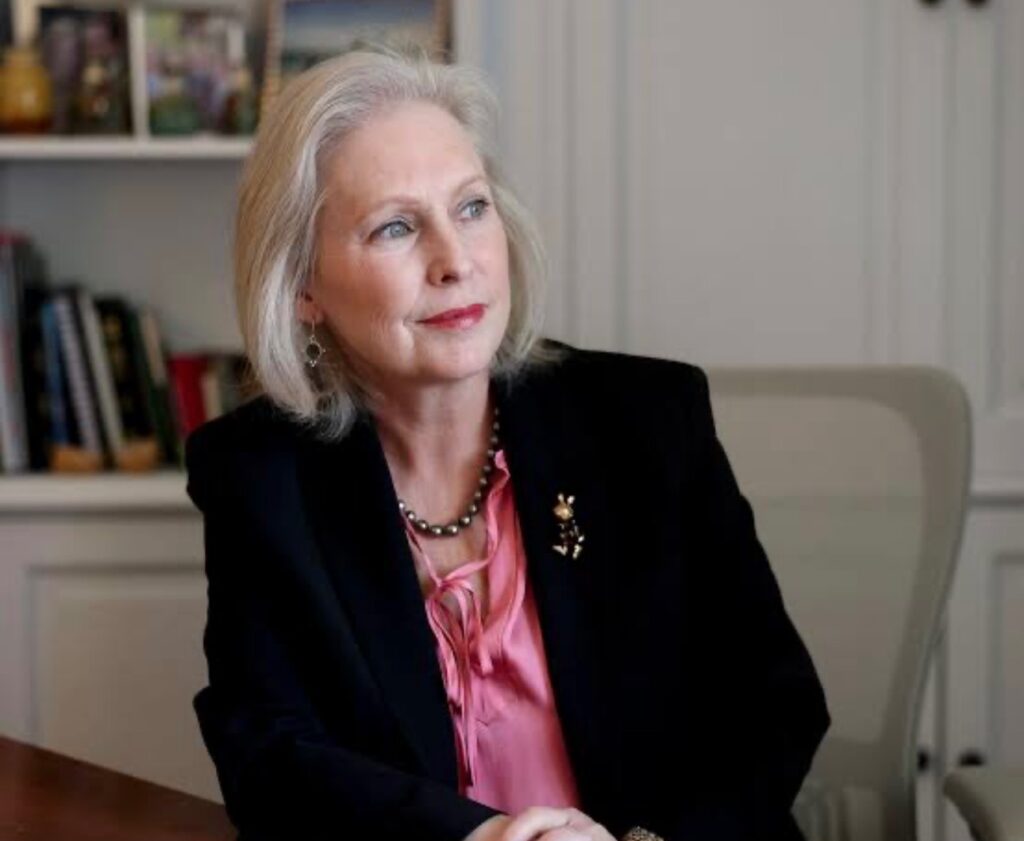
Interesting Facts from Kirsten Gillibrand’s Life and Career
- Adopting a policy of “zero tolerance” for accusations of sexual misconduct among members of Congress, Gillibrand became the first Democratic Senator to call for Al Franken to resign. In November 2017, amid the MeToo movement, she also became the first prominent Democrat to state that Bill Clinton should have resigned after his affair with Monica Lewinsky became public.
- Following Zohran Mamdani’s victory in the 2025 New York mayoral primary, Gillibrand sharply criticized his past pro-Palestinian positions on a radio show, using terms like “Intifada” and “global jihad.” The host refuted her claims, noting there was no evidence of Mamdani supporting Hamas or violence. Her comments triggered a wave of outrage among progressive politicians and calls for her resignation. Initially, Gillibrand stated she misspoke, and on June 30, she personally apologized to Mamdani.
- Gillibrand met her husband, Jonathan, on a blind date. They married in a Catholic church in Manhattan and are raising two sons. Even during her first pregnancy, Kirsten continued to work in Congress, receiving applause from her colleagues.

- Kirsten does not limit herself to politics. She has written a children’s book about women leaders and a bestseller, Off the Sidelines, urging citizens to become actively involved in public life.
- In 2019, Gillibrand attempted to run for President of the United States but was forced to drop out after low support in the primaries.
Kirsten Gillibrand is a Senator who is not afraid of difficult issues, always stands by her convictions, and strives to change the system to be more equitable. Her life and politics are a continuous fight for human rights, openness, and governmental transparency.