

Across its 200-year history, this fort has evolved from a coastal stronghold into a modern military installation that balances active service, the reserve, and historical preservation. In this article on new-york-yes.com we uncover the story of Brooklyn’s Fort Hamilton: from its construction in 1825 to its role as a contemporary Army base, tracing its involvement in global conflicts and the evolution of coastal defense.
From a Symbolic Salvo to an Impregnable Fortress
The history of Fort Hamilton begins long before its stone walls were ever laid. On July 4, 1776—the very day the Declaration of Independence was proclaimed—a small American battery on this site opened fire on the British ship HMS Asia. It was a largely symbolic attempt to halt the fleet moving toward New York; the ship sustained only minor damage, and the attack failed to change the strategic outcome. Shortly after their victory at the Battle of Long Island, the British occupied the location. However, that episode cemented the site’s reputation as a vital military vantage point.
The War of 1812 provided a fresh catalyst for defensive infrastructure. After the burning of Washington, it became clear that the nation’s coastline required serious protection. This led to the creation of the “Third System” of American coastal fortifications, which included Fort Hamilton.
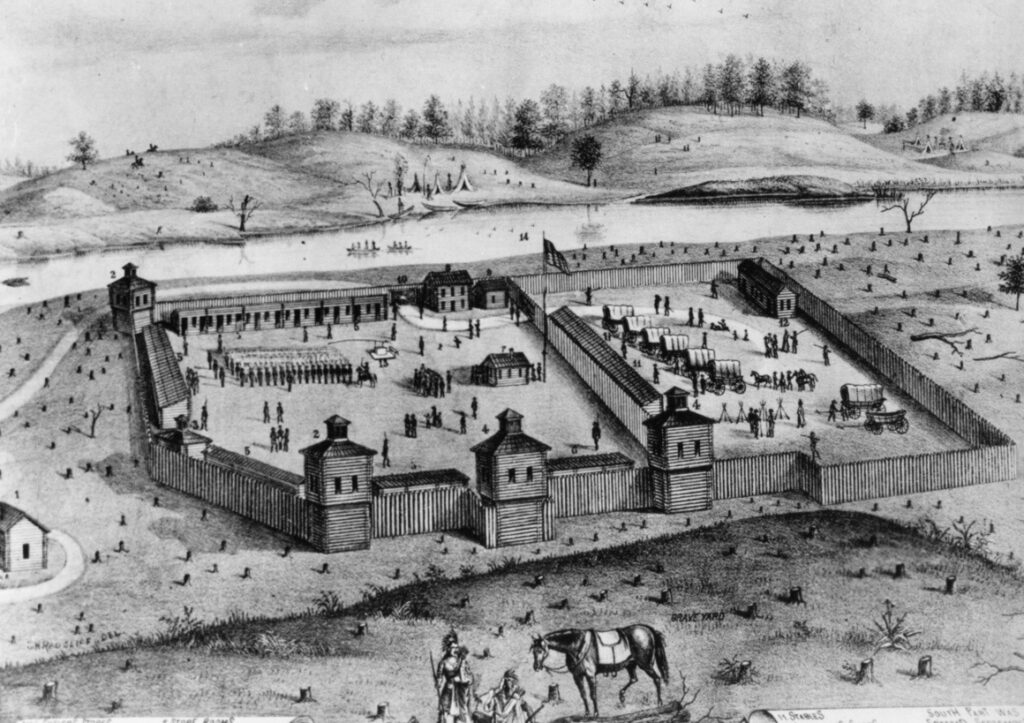
Construction began in 1825 under the direction of engineer Simon Bernard—a former aide to Napoleon Bonaparte who entered U.S. service after France’s defeat. Within a few years, at a cost of over six million dollars, the fortress was ready to house its garrison.
The fort was designed as a cornerstone for the defense of the Narrows—the main entrance to New York Harbor. Its trapezoidal shape was strategic: the wide side faced the water, while the narrow side pointed inland. Two tiers of cannons, dry moats, caponiers, and redoubts formed a sophisticated defensive network where every meter was calculated to repel an invasion. Its neighbor, Fort Lafayette, stood directly on a reef to cover the seaward approaches.
Interestingly, the fort didn’t receive its famous name immediately. Although “Fort Hamilton” was used as early as the 1820s, the installation was only officially named after Alexander Hamilton in the 20th century.
The Evolution of the Fort in the Late 19th Century
During the American Civil War, Fort Hamilton saw a strategic resurgence. Its garrison was significantly bolstered, and the fortress became part of a larger defensive web. Alongside fortifications on Staten Island, the fort controlled the harbor entrance, deterring potential raids by Confederate privateers.
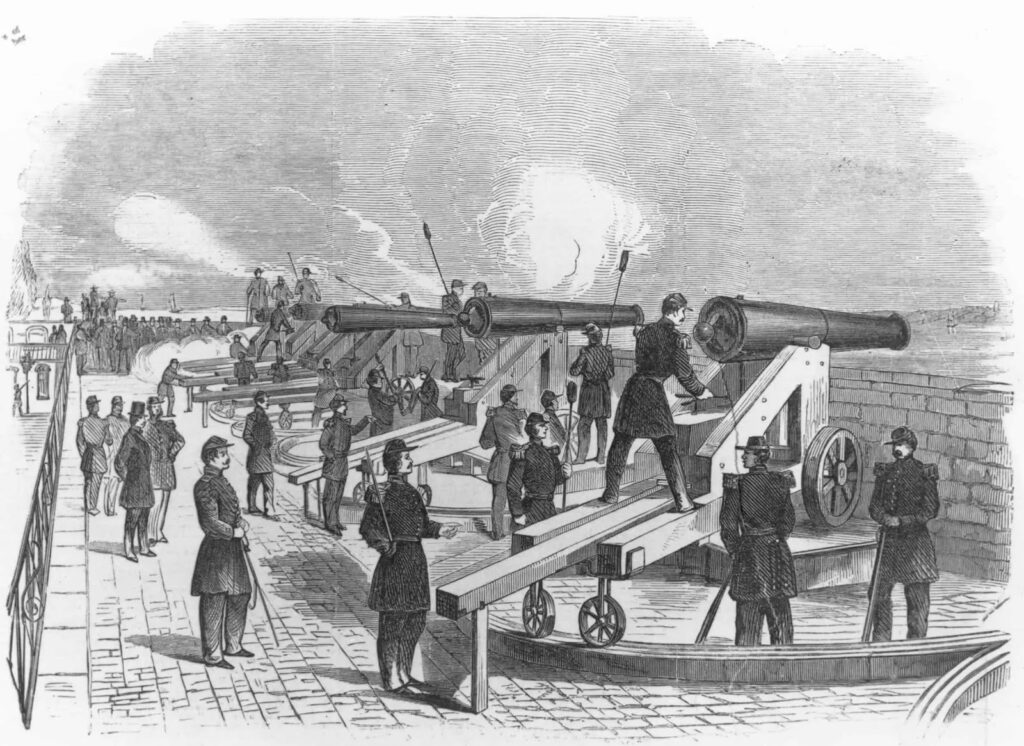
However, its role extended beyond external defense. In 1863, when massive draft riots rocked the city, troops from the fort were deployed to restore order. The fortification also served as a temporary camp for prisoners of war. But the war brought more than just combat experience; it exposed the vulnerability of old-style masonry. The advent of rifled artillery meant that massive brick walls could no longer withstand sustained bombardment. The response was a new concept of defense: cannons were moved to open positions behind massive earthen embankments, with ammunition tucked away in protected underground magazines.
In the 1870s, construction began on new batteries at Fort Hamilton, including a large “water battery” and mortar positions. However, funding soon dried up, and modernization stalled for nearly two decades.
The tide turned in 1885 when the Endicott Board, led by William C. Endicott, proposed a radical overhaul of coastal defenses. The “Endicott Program” called for modern high-velocity guns and a complete reconstruction of existing forts. For Fort Hamilton, this meant radical surgery: much of the old structure was demolished to make room for new concrete batteries.
A complex system of artillery positions rose from the ruins of the old walls—Batteries Burke, Johnston, Brown, Griffin, and others. Some featured unique configurations; for instance, Battery Griffin combined various gun types, including British models hastily purchased during the Spanish-American War when the U.S. needed to fast-track its defenses.
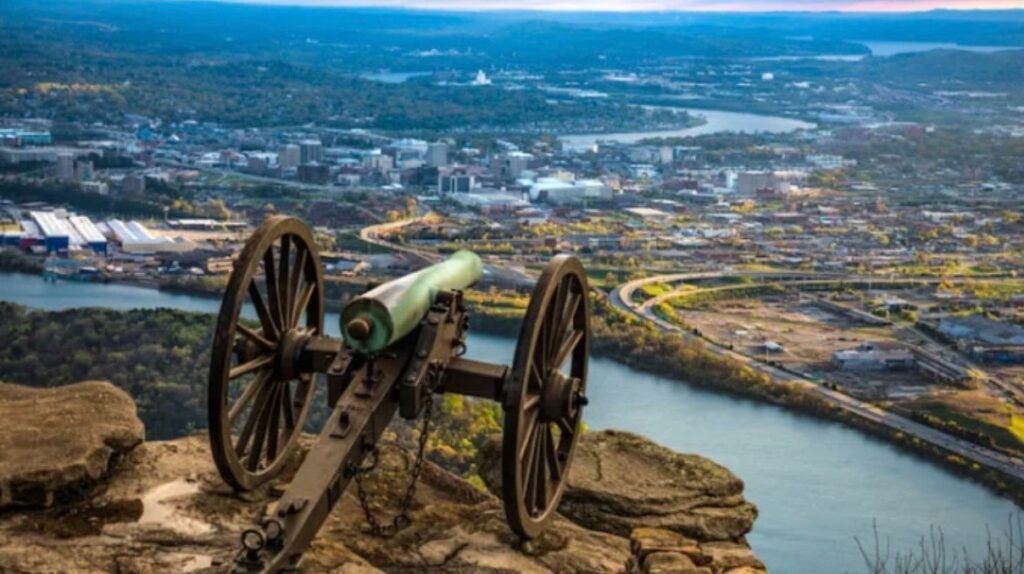
Other batteries showcased the engineering experiments of the era, such as “disappearing” carriages and reconfigured firing lines. All of this pointed to one reality: Fort Hamilton was successfully transforming from a classic stone fortress into a modern artillery complex ready for the challenges of 20th-century warfare.
The End of the Coastal Fortress: A New Role for Fort Hamilton
With the onset of World War I, the fort once again found itself at the center of military transformation. Its grounds were quickly covered with temporary barracks as a steady stream of recruits, draftees, and units prepared for deployment to the front lines. The fort evolved into a massive training and mobilization hub.
Coastal artillery played a pivotal role during this era. These units formed the backbone of the American heavy and railway artillery regiments that fought in Europe. While most of the guns used by Americans were of French or British origin, a significant portion of the personnel was transferred from coastal forts to these newly formed artillery regiments.
Fort Hamilton even contributed its own hardware, with several guns dismantled for potential use on the Western Front. However, due to complex logistics and shifting war priorities, many of these guns never saw combat. Following the conflict, none of the dismantled artillery pieces were returned to the fort.
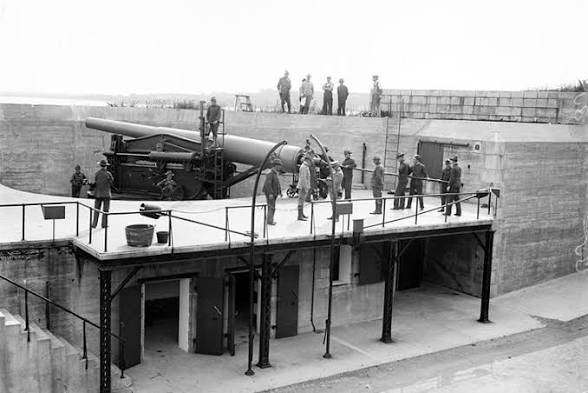
During the interwar period, the fortress gradually lost its former strategic prominence. Some armament was decommissioned or transferred for training purposes, notably to West Point. Newer, more powerful fortifications sprouted at other defensive points in New York—such as Fort Hancock—effectively pushing Fort Hamilton into a secondary role.
During World War II, the fort reprised its familiar role as a mobilization center. It served as a staging ground for troops, but its status as a frontline combat fortress had diminished. Old artillery systems were phased out, making way for modern coastal defenses and long-range guns stationed further outside the city.
The only notable defensive addition was an anti-aircraft battery, likely equipped with 90mm guns, reflecting a new era of warfare: the threat from the skies. Thus, Fort Hamilton, once a primary guardian at the harbor’s entrance, officially transitioned into a vital rear-echelon military base.
People Instead of Cannons: The Fort’s New Mission
After World War II, Fort Hamilton, like many other coastal installations, shed its original identity as an artillery stronghold. In 1948, its last coastal gun was removed. In the early 1950s, it briefly hosted four 120mm M1 anti-aircraft guns as part of the Cold War-era air defense system. By the late 1950s and early 1960s, the aging batteries were largely demolished or buried to make way for the construction of the Verrazzano-Narrows Bridge and its surrounding highways.
In the 1960s, the fort became the home of the U.S. Army Chaplain School, where hundreds of Army, Reserve, and National Guard chaplains trained for service across all military districts.
Today, Fort Hamilton stands as the only active duty Department of Defense military post in New York City. It serves as a vital hub for active-duty soldiers, reservists, the National Guard, and their families, supporting a community of approximately 50,000 people—ranging from veterans and retirees to civilian employees. The post houses the North Atlantic Division of the U.S. Army Corps of Engineers, the second-largest Army Recruiting Battalion in the country, and a Military Entrance Processing Station (MEPS). Its units remain a critical component of New York’s safety, providing essential support during emergencies such as the 9/11 attacks and the COVID-19 pandemic.
Beyond its active mission, Fort Hamilton is home to the Harbor Defense Museum. Its exhibits span the history of American coastal defense from the Revolution to World War II, showcasing a unique collection of uniforms, artillery, and small arms.
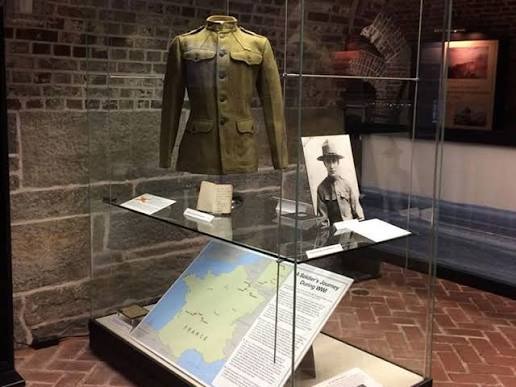
In 2025, Fort Hamilton celebrated its 200th anniversary, coinciding with the 250th anniversary of the U.S. Army. The milestone was marked by a public concert and fireworks display at Engeldrum Bluff. Commander Colonel Melissa Cantwell highlighted the fort’s enduring legacy:
“We celebrate not only a rich heritage but the brave men and women who have protected the nation and continue to serve today. From the initial defense of the harbor to modern-day support for DoD personnel, Fort Hamilton stands as the Sentry of the Narrows, protecting the people, land, and commerce of this city.”
Fort Hamilton remains a powerful symbol of the intersection between history and the future—a living witness to the evolution of the U.S. Army and the defense of New York City.