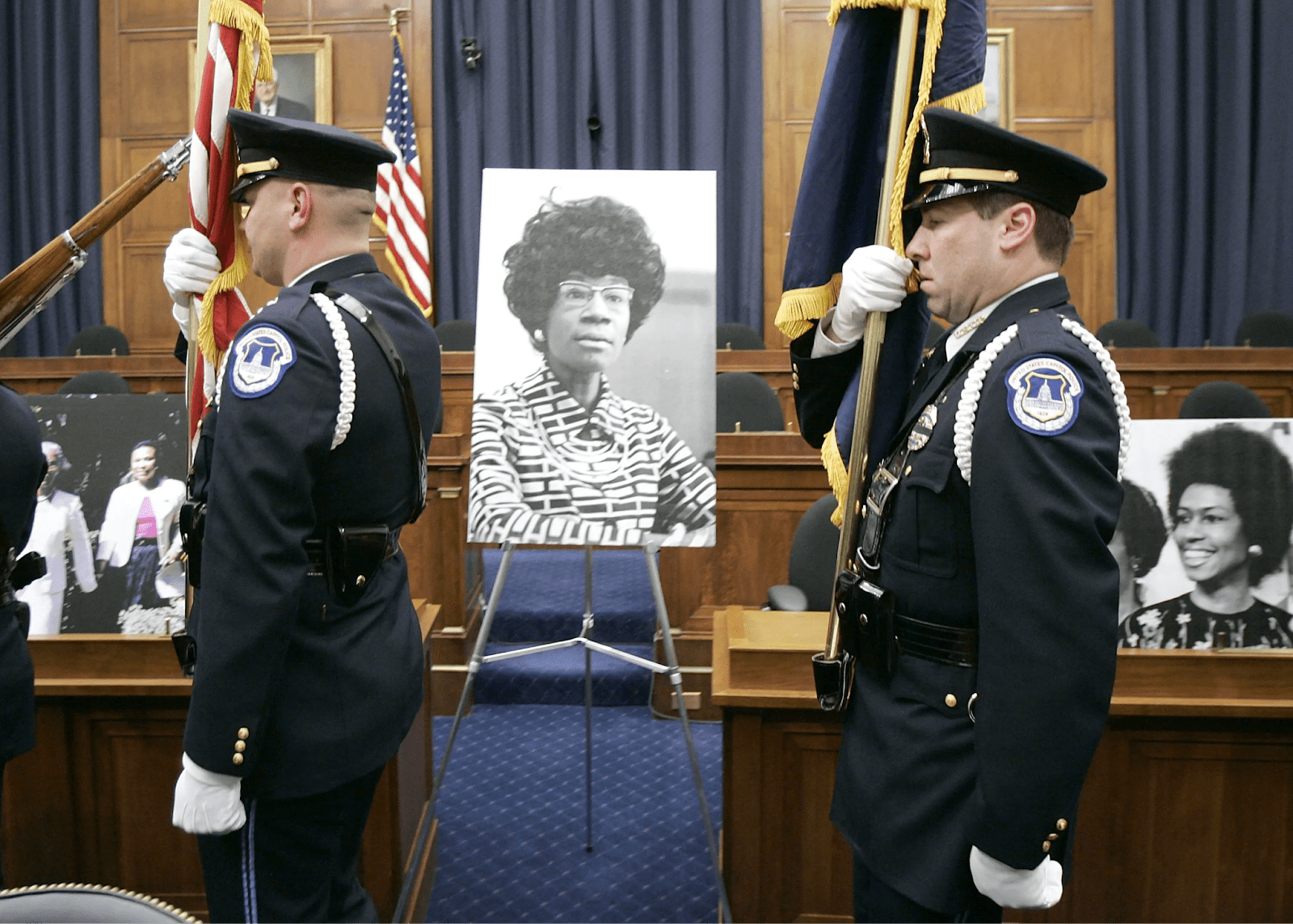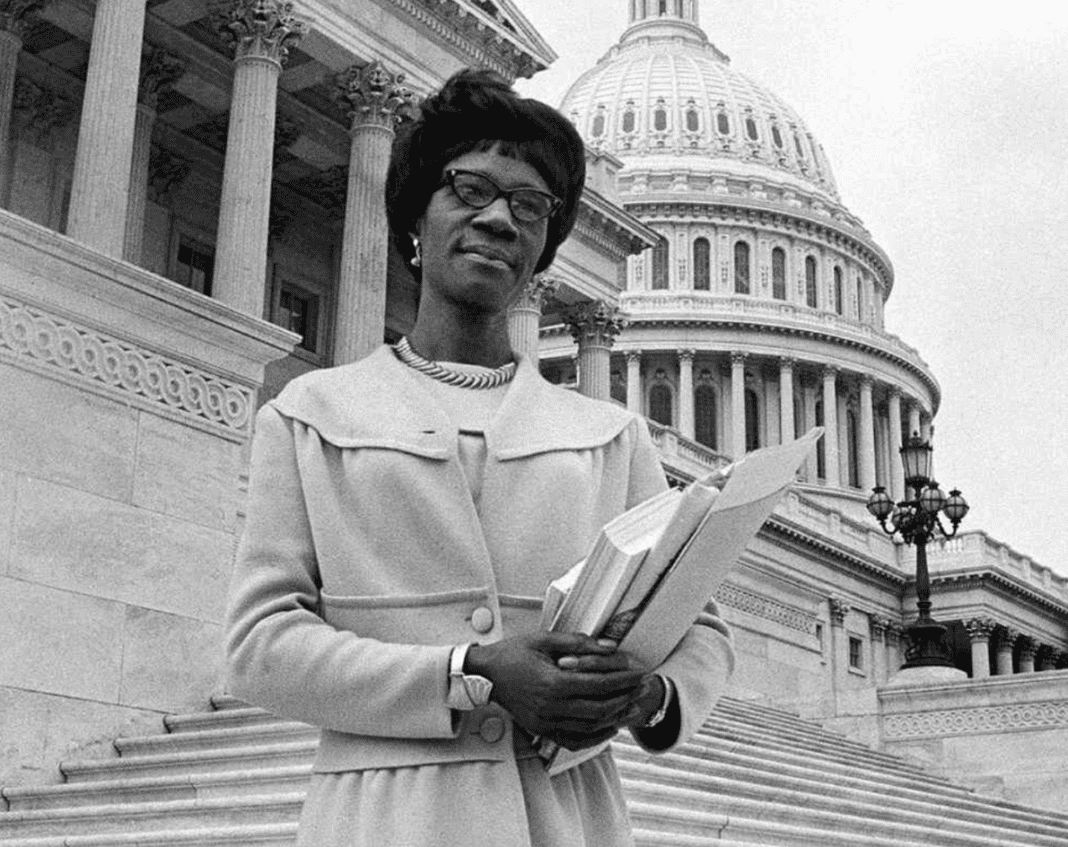

Shirley grew up and built her career during a challenging period. Specifically, the difficulties of that era were due to racial and gender discrimination, as well as various prejudices against Black people. But nothing broke Shirley’s spirit on her life’s path. She overcame all barriers, shattered stereotypes, and in 1968, she became the first Black woman elected to the U.S. Congress. Then, in 1972, Shirley became the first Black woman to run for U.S. President. Furthermore, she was the first woman in the U.S. in 1972 to participate in the Democratic Party’s presidential primary race. Read more at new-york-yes.
Early Years and the Making of a Future Politician
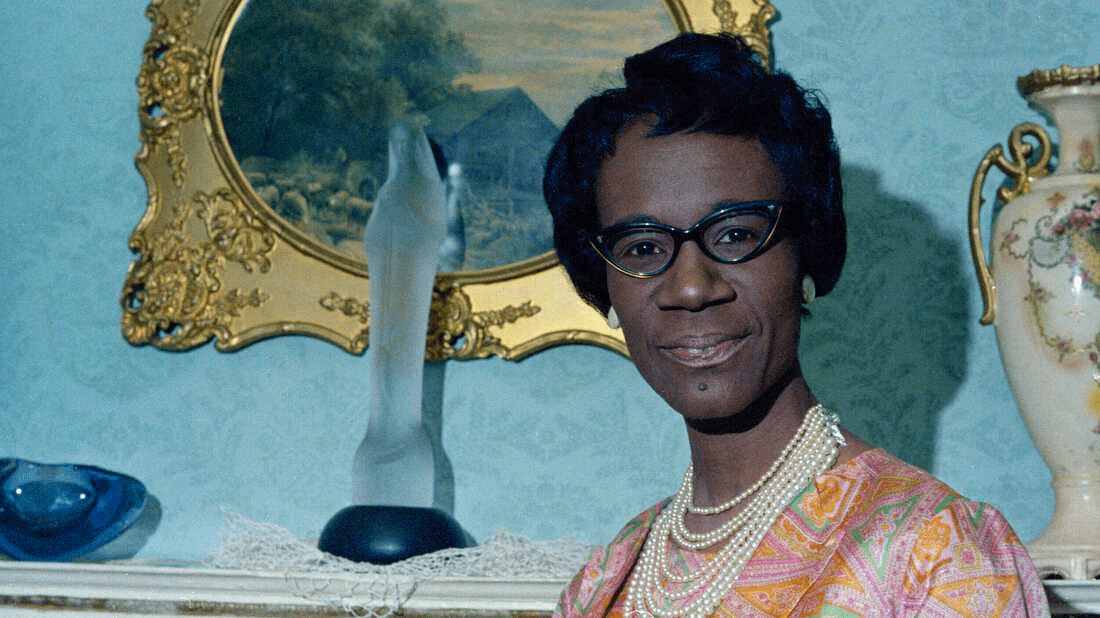
The politician’s full name is Shirley Anita St. Hill Chisholm. She was born in Brooklyn, New York, in 1924. Her parents were immigrants who came to New York from the Caribbean.
Shirley grew up during a far from simple time – the height of the Great Depression. She witnessed firsthand the struggles of working-class families and the injustices of racial discrimination. It was thanks to her parents that politics emerged in Shirley’s life. The problems her parents faced shaped her worldview and ignited her interest in social justice.
Specifically, Shirley’s father was a manual laborer. He worked at a local burlap factory and also held a part-time job as a baker’s assistant. Moreover, her father was a fervent supporter of Marcus Garvey and advocated for the rights of union members. Thus, Shirley understood what politics entailed from a young age. Through her father’s example, she saw how families like hers fought to protect their rights.
Shirley’s mother was a skilled seamstress, and simultaneously worked as a domestic helper. It was incredibly difficult for her, as she had to raise her children alongside her demanding work. Then, in 1929, Shirley’s parents found themselves unable to care for her, so they sent her and her two sisters to Barbados, to live with their maternal grandmother.
Shirley’s grandmother instilled in her a profound sense of dignity and self-worth. From a young age, Shirley knew she was someone, and she didn’t need a “Black revolution” to affirm that. She lived with her grandmother for five years, after which she returned to her native New York, where she continued her education and career development.
Shirley’s Career Development
In New York, Shirley attended Brooklyn College, where she earned a bachelor’s degree in sociology and Spanish. Furthermore, she was a member of the African American sorority “Delta Sigma Theta Sorority,” as well as the “Harriet Tubman Society.” As an active participant in these organizations, Shirley fought for inclusivity, public education on African American history, and the promotion of women’s participation in student self-governance.
After graduating from college, she worked for some time in early childhood education. Shirley served as a teacher and later as a kindergarten director. It was during this period that she became more actively involved in community advocacy, defending the rights of marginalized groups and challenging the entrenched inequality that plagued the Black community. From the 1950s onwards, significant political engagement became a central part of her life. She began to actively participate in the local Democratic Party.
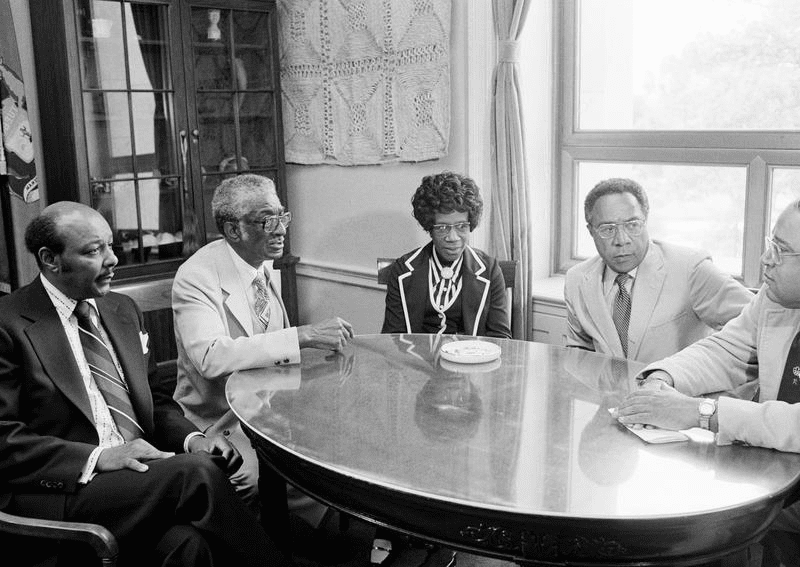
In her political career, as throughout her entire life, Shirley had to overcome numerous obstacles, especially racial discrimination. Thanks to her persistent efforts, in 1964, she was elected to the New York State Assembly. Then, in 1968, Shirley made history as the first Black woman elected to the U.S. Congress. There, for many years, she tirelessly represented the interests of New York’s 12th congressional district. She was a highly active advocate for civil rights, women’s rights, and economic justice. Across New York and the U.S. generally, she was known as a fearless champion for the disenfranchised and underserved.
But Shirley’s accomplishments didn’t end there. She understood that by holding the office of U.S. President, she could achieve even more. And in 1972, she caused a sensation by declaring her candidacy for president from the Democratic Party. This made her the first Black woman to contend for the nation’s highest office. The primary race was not without its difficulties for Shirley. She encountered numerous problems and deeply rooted societal prejudices concerning the Black population. Despite all this, she always remained full of strength and courage, advocating for inclusivity, equality, and progressive reforms. Through her example, Shirley showed millions of Americans, especially women and the Black community, that change is possible.
Achievements and Later Life
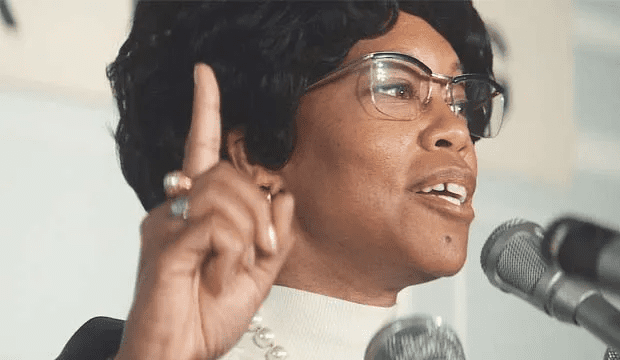
Shirley’s contribution to the development of New York’s politics and the entire country was highly significant. As the first Black woman elected to the U.S. Congress, representing New York’s 12th congressional district, she paved the way for a more inclusive and equal society.
From her first day to her last, Shirley, in her role as a congresswoman, advocated for the interests of her constituents, particularly low-income families from Brooklyn. She was also an active champion of civil rights, women’s rights, and economic justice. Shirley used her congressional platform to address issues such as poverty, discrimination, and inequality. Furthermore, her early work in education also influenced her legislative focus in the U.S. Congress. She consistently advocated for improved access to quality education and childcare services.
After concluding her political career in 1983, Shirley continued to work in the field of education.
The prominent political figure passed away in 2005 from health complications caused by a series of minor strokes.